
Boiler Replacement in Solvay's Prewar Housing
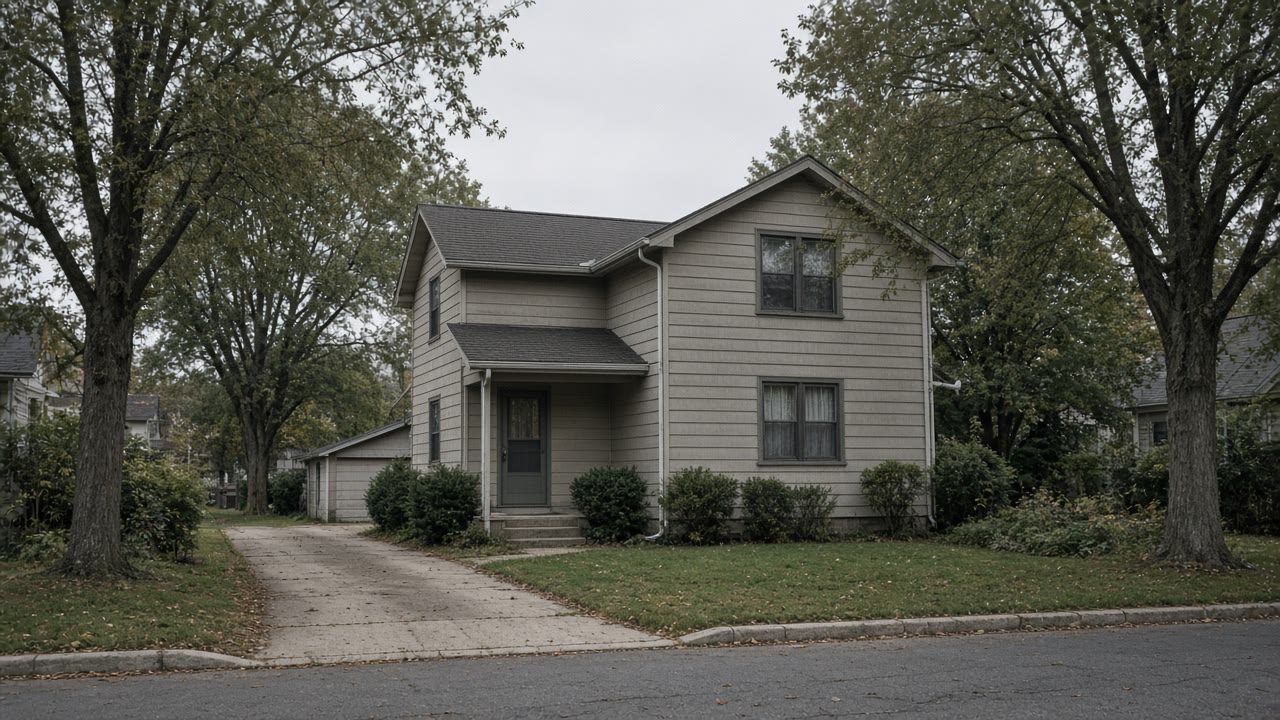
Radiator houses are ordinary in Solvay, and so is a masonry chimney that has been serving two appliances for seventy years.
Boiler Replacement quote in Solvay
Share a few details so we can confirm coverage and arrange the right next step.
Would you rather talk it through? Call (315) 640-3590, answered 24/7.
$100 off your first job
Credited by us on your first booked job.
- One credit per customer per property, on your first booked job.
- Valid through December 31, 2026.
Mention this offer when you book. Full terms.
Solvay's housing age, and the permit list that does not mention boilers
The American Community Survey 2020-2024 five-year estimates put the median year structure built in Solvay village at 1947, plus or minus 6 years. Of 3,292 housing units, 1,419 were built in 1939 or earlier, 43.1 percent, 3,010 were built before 1980, 91.4 percent, and the estimate for units built in 2000 or later is zero. Of 3,021 occupied units, 1,708 are heated with utility gas, 56.5 percent, and 1,252 with electricity, 41.4 percent, the highest electric heating share of any place in Onondaga County in this table.
Source: US Census Bureau, American Community Survey 2020-2024 5-year estimates, tables B25034, B25035 and B25040, Solvay village, New York, accessed 2026-09-14
The Village of Solvay publishes examples of projects requiring a building permit: any new buildings, all additions, remodeling and interior renovations, pools and hot tubs, sheds and garages, fences, decks and porches, demolition, and fireplaces and woodstoves. Furnaces, boilers, heating systems and air conditioning are not named on that published list. The village states that anyone unsure whether a project needs a permit should call the Code Enforcement Department at (315) 468-1679, that inspections are required during each stage of construction, and that the property owner must sign the application whoever files it.
Source: Village of Solvay, New York, Building Permits, accessed 2026-09-14
Section M1801.3 of the Residential Code of New York State applies where an appliance is permanently disconnected from an existing chimney or vent, or connected to an existing chimney or vent during a new installation. M1801.3.1 requires the chimney or vent to be resized as necessary to control flue gas condensation in its interior and to provide the appliance or appliances served with the required draft, with resizing for oil-fired appliances vented to masonry chimneys done in accordance with NFPA 31. M1801.3.2 requires the flue gas passageway to be free of obstructions and combustible deposits, to be cleaned if previously used for a solid or liquid fuel-burning appliance or fireplace, and the flue liner or inner wall to comply. M1801.3.3 requires a cleanout opening in masonry chimneys and M1801.3.4 sets clearance to combustibles.
Source: Residential Code of New York State, sections M1801.3 through M1801.3.4, Existing chimneys and vents, via UpCodes, accessed 2026-09-14
The Energy Information Administration's 2020 Residential Energy Consumption Survey reports 16.04 million homes in the Middle Atlantic census division, which is New York, New Jersey and Pennsylvania. Of those, 8.24 million use a central warm-air furnace as their main heating equipment and 4.48 million use a steam or hot water system, which is 27.9 percent. Nationally the survey reports 9.29 million of 123.53 million homes on steam or hot water, which is 7.5 percent. Heat pumps are the main heating equipment in 0.68 million Middle Atlantic homes, 4.2 percent, against 16.13 million nationally, 13.1 percent.
Source: US Energy Information Administration, 2020 Residential Energy Consumption Survey, Table HC6.7, Space heating in homes in the Northeast and Midwest regions, final data release March 2023, accessed 2026-09-14
What the oldest housing stock in the county means for a boiler
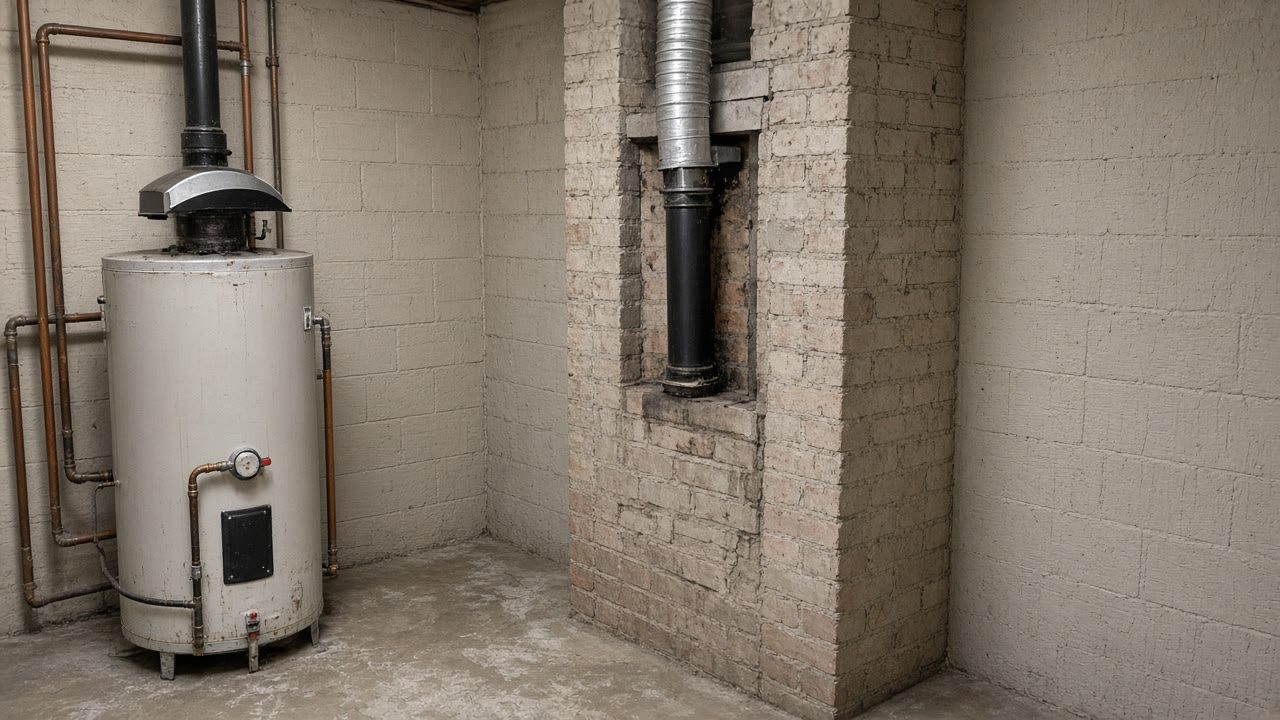
Of Solvay's 3,292 housing units, 1,419 were built in 1939 or earlier and 3,010 before 1980, 91.4 percent, the highest prewar-to-1980 share in Onondaga County with nothing recorded since 2000. Hydronic heat is ordinary in a village with that profile, and so are the complications that come with it: emitters added and removed over a century, pipe runs that follow decisions nobody wrote down, and a masonry flue that has carried more than one appliance. New York's residential code addresses the last of those at the moment of change, requiring a chimney to be resized as necessary to control condensation inside it and to give what remains the draft it needs.
Before a Solvay boiler is chosen
The paperwork here is a call rather than a lookup. Solvay's published examples of projects requiring a permit run from new buildings to fireplaces and woodstoves and do not mention boilers or heating systems, so the village asks anyone unsure to contact Code Enforcement on (315) 468-1679, and the property owner must sign the application whoever files it. Make that call early, because in a hydronic job the appliance, the near boiler piping and the chimney decision are one piece of work and reordering them mid job is expensive. Then ask for the emitter survey, because the old nameplate is the least reliable document in the house.
Ask Code Enforcement, because the list is silent
Solvay's published examples name woodstoves and fireplaces rather than boilers. The village asks anyone unsure to call (315) 468-1679.
The flue has probably carried two appliances
In housing this old the chimney was sized around a combination that is about to change, which is what the code addresses.
Survey the emitters, not the boiler room
A century of radiators added, removed and boxed in is why the nameplate is a poor guide to what the house needs now.
Call the village, then survey the radiators
Tell us what your heat comes out of and we will arrange people who do both in the right order.
Boiler and radiator questions from Solvay
Is a radiator house unusual here?
Not at all, and not in this region generally. The Energy Information Administration puts 27.9 percent of Middle Atlantic homes on steam or hot water against 7.5 percent nationally, and Solvay is the oldest housing stock in the county, so national furnace and duct content is often describing somebody else's house rather than yours.
What happens to the chimney when the boiler changes?
It becomes a live question rather than a fixture. Section M1801.3 of the Residential Code of New York State applies where an appliance is disconnected from an existing chimney or connected to one, and requires it to be resized as necessary to control flue gas condensation and provide the required draft. Ask whether that work is inside the price.
A century of changes in one house
Send the Solvay address and we will find installers who walk the system before pricing an appliance.