
Furnace
Your old furnace is due out, and the quote has no worksheet
Once your furnace job is booked through us, $100 off your first job is credited.
If the quote on your table copies the furnace size off the label of the old one and shows no worksheet, ask for the load worksheet before you sign. Then ask what happens to your water heater once the furnace leaves the chimney. Send your details and we will give you the questions and introduce one local contractor.
Three questions
Three questions to ask before anyone prices your system
Chimney and water heater Decides this job
What happens to my chimney and my gas water heater?
The load worksheet
Will you do a load calculation and give me the worksheet?
The worksheet
What any quote should show
| Ask on every quote | Quote A | Quote B | Quote C |
|---|---|---|---|
| 1A load worksheet for your house | Quote A answer | Quote B answer | Quote C answer |
| 2How the new unit will vent | Quote A answer | Quote B answer | Quote C answer |
| 3What happens to the water heater | Quote A answer | Quote B answer | Quote C answer |
| 4Duct or pipe changes, listed one by one | Quote A answer | Quote B answer | Quote C answer |
| 5Who pulls the permit | Quote A answer | Quote B answer | Quote C answer |
| 6What is removed and hauled away | Quote A answer | Quote B answer | Quote C answer |
| 7A start date and a payment schedule | Quote A answer | Quote B answer | Quote C answer |
We tell you what to ask before anyone prices a new system, then introduce a local contractor who does the work.
Start your worksheet
Tell us about the house and the system. You get the three questions, and a local contractor only if you say yes.
Credit: $100 off your first job
The $100 comes off once your installation is booked through us.
- We fund the $100; the contractor's quote is unchanged.
- One credit per customer at each property.
- Book the job by December 31, 2026.
- Mention the credit when you book.
This fits when
When furnace is the next decision
- The furnace came with the house If nobody can say when it went in, ask a contractor to read the age off the unit and write it on the quote.
- A bid copied the old size When a quote matches the old furnace and no worksheet came with it, ask how the size was chosen.
- One bid lists a liner and another is silent If one quote lists a liner and another does not, ask each contractor what happens to the water heater and get the answer in writing.
- You have added insulation or new windows A tighter house needs less heat than the old furnace was built to give. Ask for the calculation to be done again.
- You want central air next A furnace and a cooling coil share a blower and ducts, so ask the contractor how the quote handles both.
Where it sits
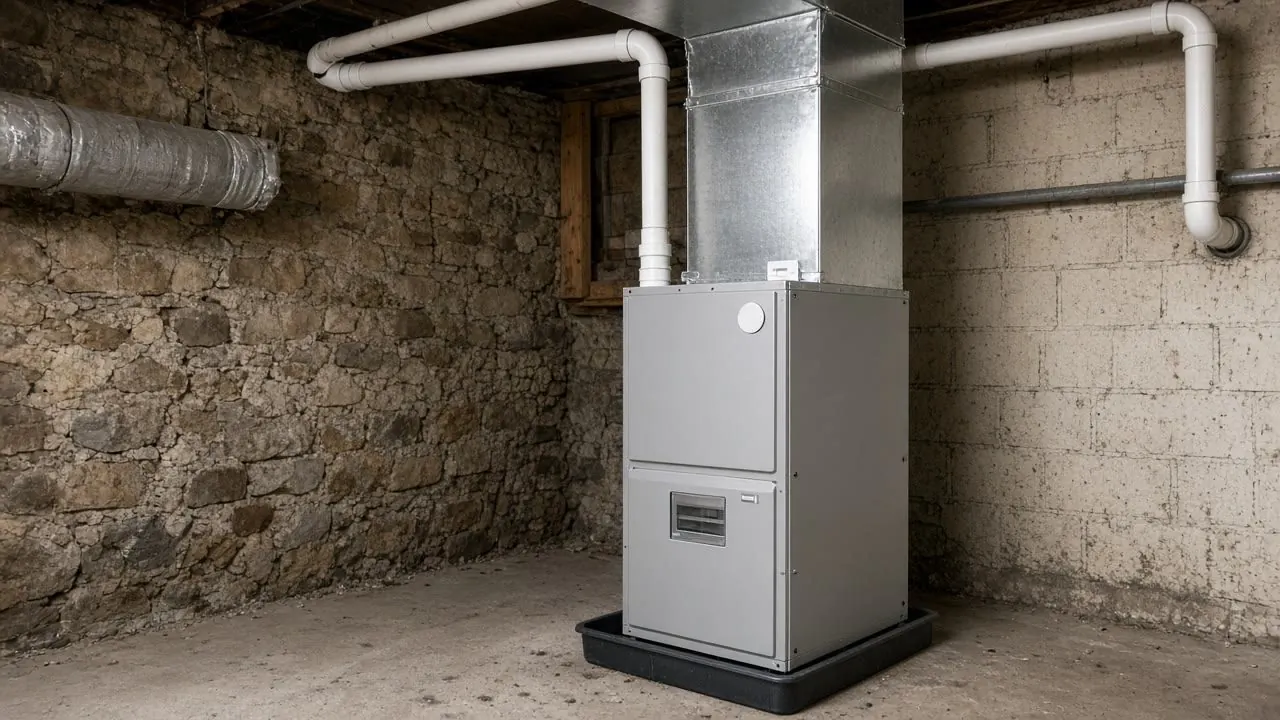
Inside the house: furnace
- FurnaceIts size should come from your worksheet, not from the label on the unit it replaces.
- Old chimneyA condensing furnace cannot share it, so the quote should say what the chimney does next.
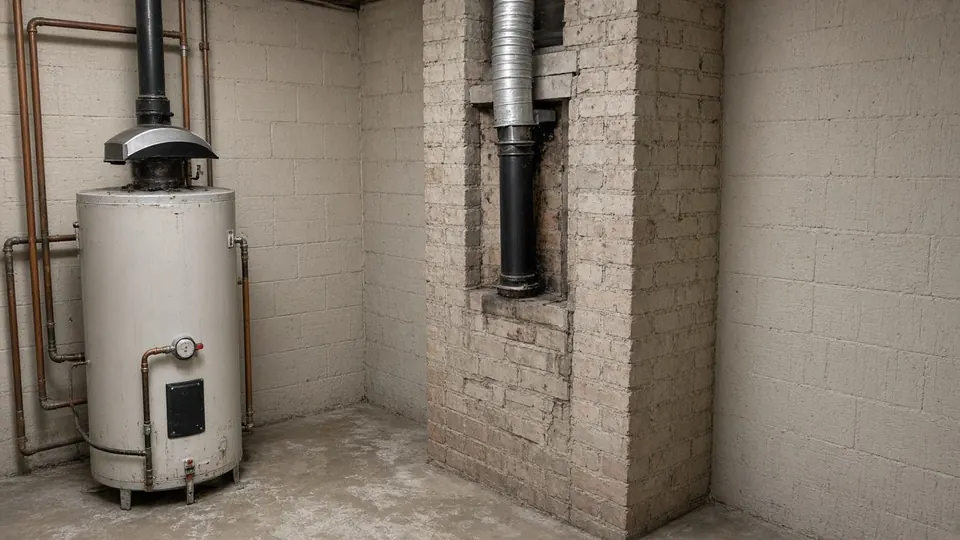
- Gas water heaterIf it stays on the old chimney, ask for the liner or the other remedy by name.
- Supply plenumAsk whether the ducts can carry the airflow of the new blower.
Basis: Residential Code of New York State, Chapter 14 Air Source Heat Pumps: Don't Oversize, NYSERDA fact sheet
Spec FAQ
Questions before you ask for quotes
| You ask | Short answer |
|---|---|
| F1 What is a load calculation, and why does my furnace need one? | It is the arithmetic of how much heat your house loses on a design-cold day. The contractor measures walls, windows, roof and floor, then picks a furnace to match. Ask for the worksheet so you can see the result. |
| F2 My furnace just stopped. Should I replace it? | If your furnace has stopped, a repair may be the cheaper first question. |
| F3 Does a bigger furnace heat my house better? | Not by itself. A furnace larger than the load starts and stops often and can leave some rooms warmer than others. Ask the contractor to show why this size fits your house. |
| F4 Do I need a new chimney liner? | Only if a gas appliance stays on the old chimney. Ask the contractor what remains on it after the furnace leaves, and have the answer written on the quote. |
| F5 Can my existing ducts handle a new furnace? | Sometimes, and sometimes not. A new blower can move more or less air than the old one, so ask the contractor to check your trunk lines against the new equipment. |
| F6 Who pulls the permit for a furnace replacement? | Your own town or village decides whether it needs one, and the rules differ between municipalities. Ask the contractor who files it and ask your code office if you are unsure. |
| F7 Is New York making me switch to electric? | No. The state's all-electric rule covers new buildings, and the Assembly's own explainer says existing gas appliances can be replaced with new gas appliances. Our guide on the rule has the detail. |
What the job covers
What a furnace job covers
- Taking out the old furnace The contractor disconnects the gas, power and flue pipe, removes the unit and caps what is left.
- A new vent path A condensing furnace needs its own vent. Ask whether it goes out a side wall or up through the house.
- A plan for the water heater If the water heater shared the chimney, the quote should say what carries its exhaust now.
- Connections and condensate Gas, electric and the drain for the water the furnace makes should each be on the quote.
- Start-up and paperwork The contractor starts the furnace and checks its operation. Ask who handles any permit your town requires.
The size should come from your house, not the label
New York's residential code says heating equipment is sized under ACCA Manual S from loads worked out under Manual J, or another approved method. Ask the contractor which method applies to your quote, and ask to see the result.
Copying the old size is the shortcut. State energy researchers tell contractors not to swap in a like-sized unit without their own calculation, because insulation and windows may have changed since the old furnace went in. They add that many furnaces and boilers are oversized to begin with.
Tell us the house and the system.
An oversized furnace starts and stops often and can leave rooms at uneven temperatures. If a bid says the old size will do, ask for the worksheet behind that sentence.
Basis: Residential Code of New York State, Chapter 14 Air Source Heat Pumps: Don't Oversize, NYSERDA fact sheet
What your old chimney does after the switch
In some houses a furnace and a gas water heater vent into one masonry chimney. A condensing furnace cannot use that chimney, so it gets its own vent and the water heater is left on a flue built for two.
Oak Ridge National Laboratory says the remedies are a liner sized for the water heater alone or a powered draft inducer, and that both add cost. The federal checklist for furnace replacement says the contractor must tell you the fix when this happens.
Tell us the house and the system.
Ask each contractor to name the fix on the quote. If one bid has it and another does not, put the question to the second contractor before you compare the totals.
Five things to say on the first call
You can learn a lot from one phone call if you ask in the right order. Keep a pen handy and write down what you hear, because the answers will matter when the quotes arrive.
- Say how old the house is and what you have now. Ask whether the contractor works on houses like yours.
- Ask whether they will do a load calculation and give you the worksheet.
- Ask what they do when a gas water heater shares the chimney.
- Ask what they check in the ducts before they name a furnace.
- Ask who pulls the permit and whether you will see it.
Tell us the house and the system.
A contractor who says it depends on the day is telling you something too. Compare the answers across calls, not only the totals across quotes.
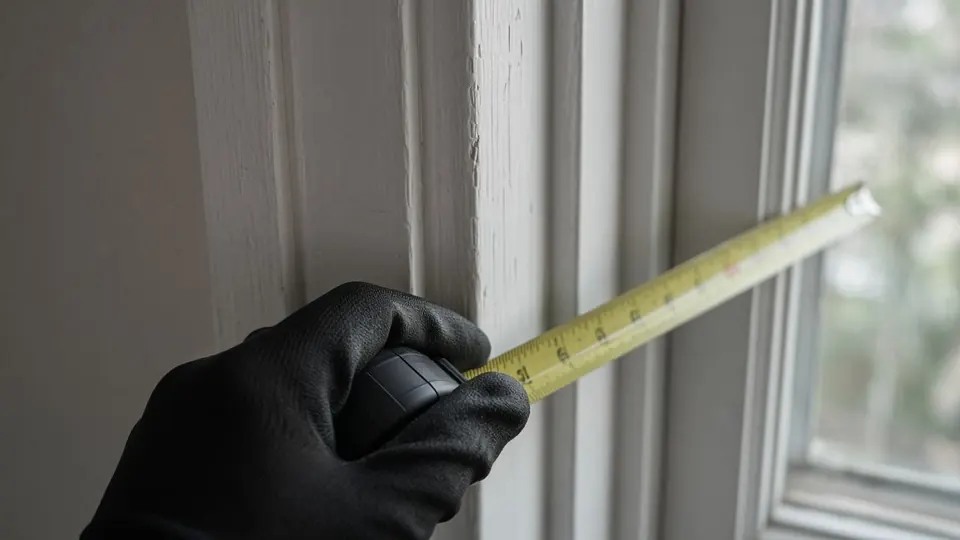
Where a side wall vent can and cannot go
A side wall vent has to clear windows and doors, and the pipes have to sit above the deepest snow, including drifts. Syracuse averages about 124 inches of snow a year, so the height of the terminal is a real question on your wall.
Ask the contractor to show you the exact spot on the outside of your house. If the best wall faces the street or a neighbor, ask what the second choice is and what it costs.
Choosing when to replace it
Heating season in this county runs from October through April. A furnace that is still working gives you time to collect two or three quotes and read them without pressure.
Ask each contractor how the quote handles the vent, the size basis and the ducts, and keep the answers together so you can compare them.
Pipe run
How a furnace job runs
- 01
Describe the furnace and the chimney
Give us the age of the house, the fuel, and whether a water heater sits near the furnace.
- 02
Hold the questions up to every bid
Use the same three questions with each contractor so the answers are comparable.
- 03
Lay the quotes side by side
Tick each line of the checklist. A blank line is a question, not a discount.
- 04
Book the one that shows its work
Choose the contractor who gave you the worksheet and the vent plan in writing.
On paper
What to hold before you sign
The load worksheet
It shows how the furnace size was calculated for your house. Keep a copy with the quote.
The vent and chimney plan
A short written line on where the new vent runs and what happens to the old flue.
The permit line
Ask who pulls the permit in your town or village and how you will see that it was issued.
The written scope
What is removed, what is installed, what is excluded and what would change the price.
Hold quote A, B and C side by side first.
What moves the price
What changes a furnace quote
- The vent route: the route the vent takes, whether through a side wall or up through the house, changes the work.
- The water heater: a liner or a powered draft inducer adds to the job when the water heater stays on the old chimney.
- The furnace you choose, including how many stages of heat it has.
- Duct changes needed to carry the airflow of the new furnace.
- Whether a cooling coil goes in during the same visit.
- How easy the furnace is to reach: a tight basement takes longer than an open one.
- Permit fees, which your town or village sets.
The Heating and Cooling Syracuse pledge
- Asking us is free, and so is the introduction.
- You get the three questions before anyone quotes.
- You decide whether a contractor visits.
- Your $100 comes off the way our Terms set out.
The contractor you choose answers for the installation itself.
Heating and Cooling Syracuse, (315) 640-3590 Full start-up terms
Credit: $100 off your first job
The $100 comes off once your installation is booked through us.
- We fund the $100; the contractor's quote is unchanged.
- One credit per customer at each property.
- Book the job by December 31, 2026.
- Mention the credit when you book.
Where
Furnace in your town
Median home built before 1940
Median home built 1940 to 1969
Median home built 1970 or later
Get the worksheet before the price.