
What a Replacement Quote Should Contain, and Why Three Bids Differ
Usually not the box. The gap between bids is nearly always the work around it, and three line items account for most of it: what happens to your chimney once the old furnace stops venting into it, whether anybody calculated the size, and whether a permit is being pulled. Ask each bidder to price those three separately and the quotes become comparable in an afternoon.
Already know you need someone out? Call (315) 640-3590, answered 24/7.
How the cheapest of three quotes becomes the expensive job
What you have today
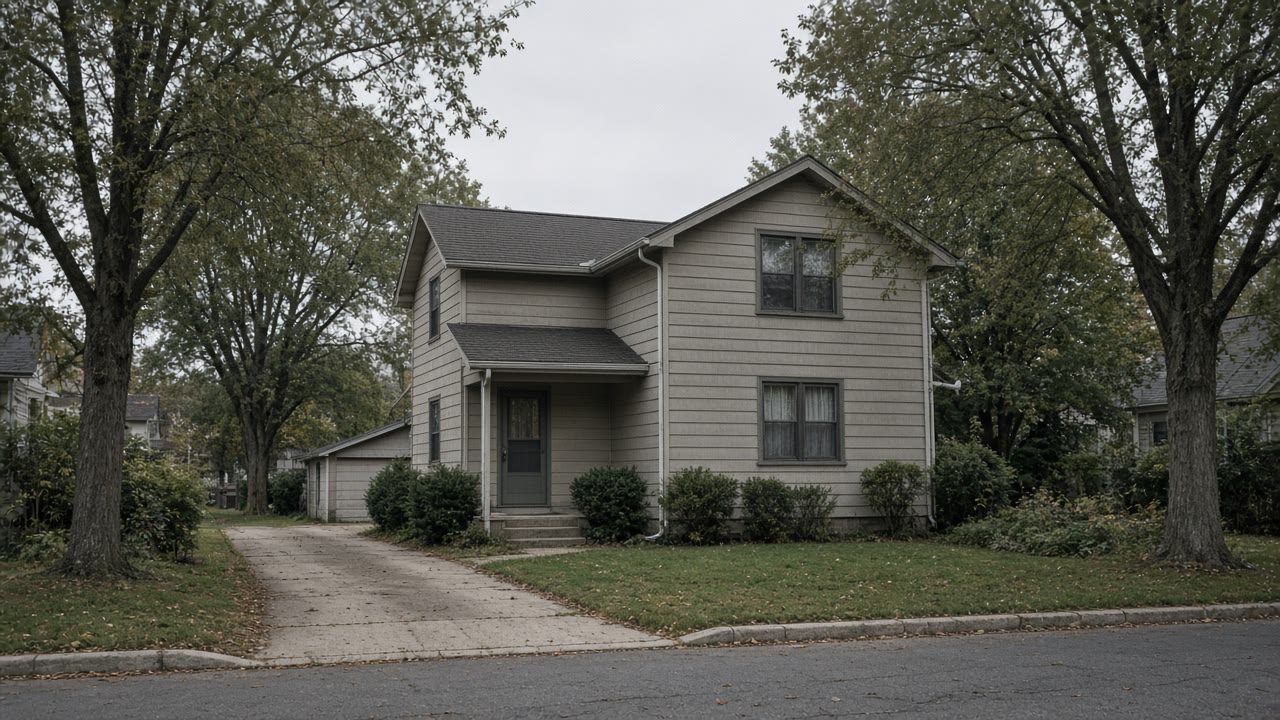
Common in a housing stock built around 1948A noncondensing furnace and an atmospheric gas water heater sharing one masonry or metal chimney. The furnace is the big appliance and its exhaust is what keeps that flue warm and drafting.
The new furnace goes in
A condensing furnace, vented out a side wallOak Ridge National Laboratory records that the existing negative pressure vent cannot be used by the new furnace directly, so the old flue inlet is sealed and new venting is run.
The water heater is left behind
Alone on a flue sized for two appliancesOak Ridge calls it orphaned, and records that the oversized cross section can leave insufficient draft to exhaust the water heater under some ambient temperature and wind conditions.
The remedy, priced or missing
The line item the bids disagree aboutOak Ridge names a Type B liner sized for the water heater alone, or a powered draft inducer with backflow preventer, and states that both result in extra costs.
Oak Ridge National Laboratory ORNL/TM-2014/624, Condensing Furnace Venting, October 2014.
Line item one: the chimney your old furnace was keeping warm
This is the single item most likely to explain a difference of thousands, and it is invisible until somebody names it. Oak Ridge National Laboratory describes the sequence exactly. Where a noncondensing furnace and an atmospheric water heater are common-vented through a masonry or metal chimney, the furnace is removed, the flue inlet it used is sealed and the new condensing furnace is vented through a side wall, the water heater is, in the laboratory's word, orphaned on the original vent. The reason that matters is arithmetic rather than opinion: the chimney's cross-sectional area was sized to vent two appliances and now serves one, so Oak Ridge records that there could be insufficient draft to properly exhaust the flue gases from the water heater under some ambient temperature and wind conditions. It names two practical remedies, a Type B chimney liner properly sized for just the water heater, or a powered draft inducer with backflow preventer, and states plainly that both result in extra costs. In a city where 69.3 percent of occupied homes are heated with utility gas, this is not an edge case.
Why the new furnace cannot simply use the flue that is already there
Homeowners reasonably assume the chimney is the chimney. The equipment categories say otherwise. Oak Ridge National Laboratory states that in every upgrade of this kind the existing noncondensing furnace is served by a negative static pressure vent, a clay tile lined masonry chimney or a Type B double-wall metal chimney terminating above the roof, and that this existing vent cannot be used by the new condensing furnace directly. It describes three options: reuse the existing vertical vent as a chase for the new venting system, install a new horizontal side-wall vent system where physical constraints and codes allow, or run a new vertical vent through the building, which the laboratory calls difficult and costly. And it says the part that explains your spread of quotes: in all of these cases there are added costs compared with a like-for-like noncondensing furnace replacement. So when one bid is for a high efficiency furnace and another is for a noncondensing unit, you are not comparing two prices for the same job. You are comparing two different jobs.
The duty the code attaches the moment an appliance leaves a chimney
New York's residential code speaks to this directly, and the trigger is the event rather than the calendar. Section M1801.3 applies where an appliance is permanently disconnected from an existing chimney or vent, or connected to an existing chimney or vent during a new installation, which is precisely what a furnace replacement does. Section M1801.3.1 then requires the chimney or vent to be resized as necessary to control flue gas condensation in its interior and to provide the appliance or appliances served with the required draft. Sections M1801.3.2 through M1801.3.4 require the flue gas passageway to be free of obstructions and combustible deposits, require cleaning where the flue previously served a solid or liquid fuel appliance, require a cleanout opening in masonry chimneys and set clearance to combustibles. One thing we will not tell you is that a particular level of chimney inspection is triggered, because the standard people cite for that is not published at any public address we can quote from, and every description of it we found traced to a chimney company rather than to a standards body.
Your contractor is supposed to raise the water heater without being asked
There is a published expectation on this, and it is useful to be able to point at it. The Department of Energy's Building America Solution Center gas furnace replacement checklist states that if installing a direct-vent gas furnace results in an orphaned gas water heater still connected to an existing chimney that may now have inadequate draft to remove the water heater's combustion emissions, the contractor shall inform the homeowner of necessary remediation steps, giving a chimney liner as its example. That is the disclosure, and it belongs in the conversation before you sign rather than in a phone call from the basement on install day. If a bid does not mention the water heater at all, that is not proof of anything. It is a question. Ask what happens to the water heater venting when the furnace comes out, and ask for the answer in writing, because the difference between a bid that carries this item and one that does not is the difference you are trying to explain.
Where the new vent may come out of a wall, in a city that gets 123.8 inches of snow
Side-wall venting has geometry rules, and in Syracuse one of them is not academic. Oak Ridge National Laboratory records the constraints that restrict side-wall vents: the exhaust pipe must be a minimum of two feet from a window, door or decking, exhaust and intake pipes must be above the highest anticipated snow level including possible drifting snow, intake pipes must be at least two feet from dryer or power-vented water heater exhaust, exhaust cannot be pointed into prevailing winds or at a neighboring house, and exhaust and intake must be on the same wall so they see the same wind pressures. New York's own code adds the floor: section G2427.8 requires the bottom of a vent terminal to be located not less than 12 inches above finished ground level, with further clearances from doors, operable windows and air inlets. The annual snowfall normal at Syracuse Hancock International Airport is 123.8 inches, with 92 inches of that falling in December, January and February. Where a termination sits on the wall is worth asking about, and worth looking at after the first real storm.
Line item two: the load calculation, priced or absent
Section M1401.3 of the Residential Code of New York State says heating and cooling equipment shall be sized in accordance with ACCA Manual S based on building loads calculated in accordance with ACCA Manual J, or other approved methodologies. That is a piece of work somebody either did or did not do, and it is the main reason two bidders can propose different capacities for the same house and both sound confident. On a quote it can appear as a line, or as a sentence in the scope, or not at all. Ask each bidder for the worksheet. It is the cheapest comparison tool you have, because once you are holding three of them the argument stops being about brands and starts being about one number that describes your house. Our separate guide on sizing goes through what the worksheet contains and what the inputs mean.
Line item three: the permit, and what it is actually buying you
A permit does two things for a homeowner. It brings an inspection, which is the only independent look anybody takes at work that will be hidden behind a furnace cabinet for twenty years, and it requires the contractor to hold whatever credentials the municipality asks for, which the cheapest bidder may not have. In the City of Syracuse, the Central Permit Office lists its residential construction permit categories and then states that all trade and fire prevention permits, giving HVAC, electrical, fire alarm and sprinkler as its examples, must be obtained separately. Whether a permit is required for your address is decided by your own city, town or village rather than by the state or the county, and the answer genuinely differs across this metro. Our permits guide sets out what each municipality publishes and which office to call. What matters on a quote is simple: is the permit included, who is pulling it, and is the fee in the number you are looking at.
The alarm rule you already live under, and why it exists
Since 2010 New York has required carbon monoxide alarms in homes regardless of when they were built. The rule implementing Amanda's Law amended the Residential Code and the Fire Code of New York State to require carbon monoxide alarms in all one and two family dwellings, townhouses, condominium and cooperative dwelling accommodations and multiple dwellings, without regard to the date of construction or sale, replacing an earlier rule that reached only homes built or offered for sale after 2002. The state's code agencies restate it for existing property: section 705 of the Property Maintenance Code requires carbon monoxide alarms in accordance with the Fire Code, whose section 915.1 covers new and existing residential buildings. We raise it here for one reason, which is that combustion venting work is the moment to confirm your alarms are in place and working, and that is a conversation to have with whoever does the installation.
How to make three bids genuinely comparable, in one email
Send all three bidders the same four questions and read the replies next to each other. One, what design temperature and what calculated load did you size this from, and may I have the worksheet. Two, what happens to the water heater venting when the old furnace comes out, and what does that work cost as its own line. Three, is a permit included, who pulls it and with which office. Four, what are the model numbers, and is the equipment current production. A bid that omits the venting work is not cheaper than one that includes it, it is smaller, and the difference will arrive later either as a change order or as work nobody did. One more item worth asking about while somebody is standing in the basement: section 27-54(h) of the City of Syracuse Property Conservation Code requires direct-fired heat producing equipment and its enclosure to have a supply of air adequate to replenish that consumed by complete combustion, which is a question about the room as much as about the appliance. When you have the answers, send them to us with your address and we will connect you with licensed, insured contractors who will price the whole job rather than part of it.
Sources used in this guide
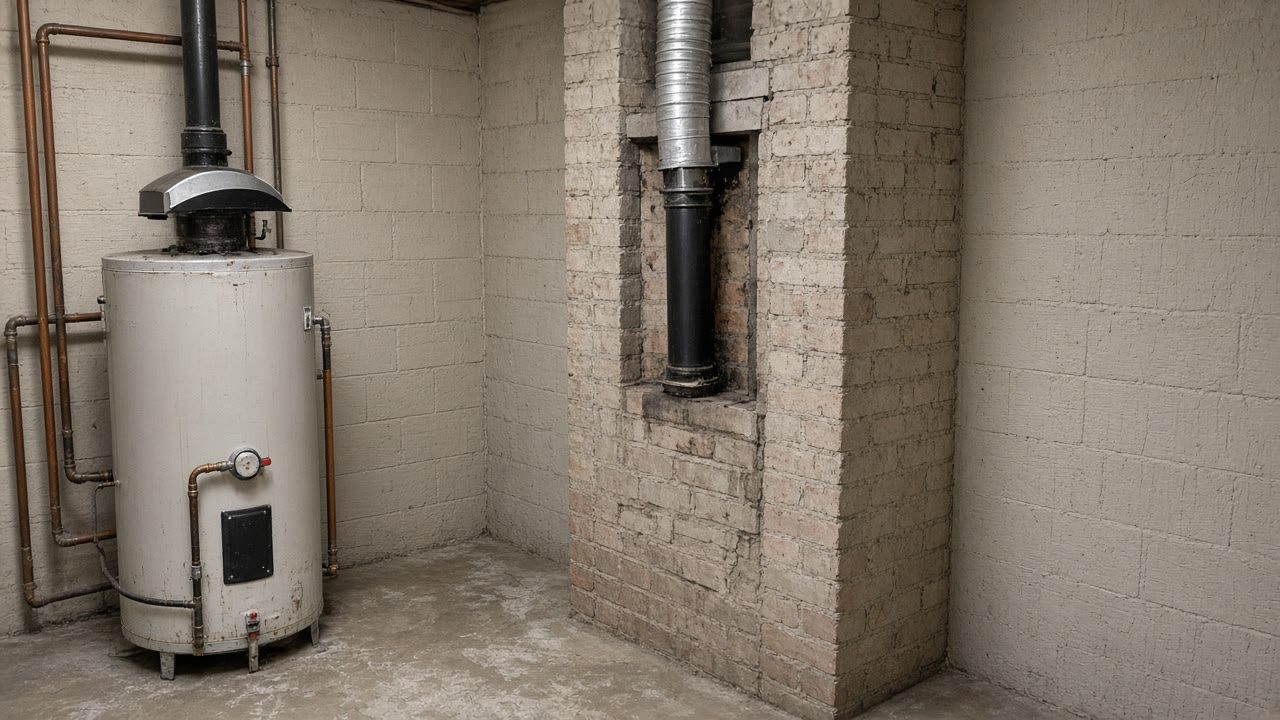
Oak Ridge National Laboratory describes the mechanism directly. Where a noncondensing furnace and an atmospheric water heater are common-vented through a masonry or metal chimney, the furnace is removed, the chimney flue inlet it used is sealed and the new condensing furnace is vented through a side wall, the water heater is, in the report's word, orphaned on the original vent and could experience a venting performance loss. The laboratory states that the potential loss of performance stems from the fact that the chimney vent cross-sectional area was originally sized to vent both appliances but now serves only the water heater, so there could be insufficient draft to properly exhaust the flue gases from the water heater under some ambient temperature and wind conditions, and that this spillage of flue gases back into the basement through the water heater draft hood could result in dangerous levels of carbon monoxide and other pollutants in the home. It names two practical remedies: a Type B chimney liner properly sized for just the water heater, or a powered draft inducer with backflow preventer, and states that both result in extra costs.
Source: Oak Ridge National Laboratory, ORNL/TM-2014/624, Condensing Furnace Venting Part 1: The Issue, Prospective Solutions, and Facility for Experimental Evaluation, Momen, Munk, Biswas and Hughes, October 2014, accessed 2026-09-14
Of 59,816 occupied housing units in the city of Syracuse, the American Community Survey 2020-2024 five-year estimates report 41,477 heated with utility gas, 69.3 percent, 15,088 with electricity, 25.2 percent, 999 with bottled, tank or LP gas, 1.7 percent, 585 with fuel oil or kerosene, 1.0 percent, 960 using no fuel at all, 1.6 percent, and small numbers on wood, coal and solar.
Source: US Census Bureau, American Community Survey 2020-2024 5-year estimates, table B25040, House Heating Fuel, Syracuse city, New York, accessed 2026-09-14
Oak Ridge National Laboratory states that in every upgrade of this kind the existing Category I noncondensing furnace is served by a negative static pressure vent, for example a clay tile lined masonry chimney or a Type B double-wall metal chimney terminating above the roof, and that this existing vent cannot be used by the Category IV condensing furnace directly. It describes the options as reusing the existing vertical vent as a chase for the new venting system, installing a new horizontal side-wall vent system where physical constraints and codes allow, or running a new vertical vent through the building, which it calls difficult and costly. It states that in all of these cases there are added costs compared with a like-for-like noncondensing furnace replacement.
Source: Oak Ridge National Laboratory, ORNL/TM-2014/624, section 2.3.1, October 2014, accessed 2026-09-14
Section M1801.3 of the Residential Code of New York State applies where an appliance is permanently disconnected from an existing chimney or vent, or connected to an existing chimney or vent during a new installation. M1801.3.1 requires the chimney or vent to be resized as necessary to control flue gas condensation in its interior and to provide the appliance or appliances served with the required draft, with resizing for oil-fired appliances vented to masonry chimneys done in accordance with NFPA 31. M1801.3.2 requires the flue gas passageway to be free of obstructions and combustible deposits, to be cleaned if previously used for a solid or liquid fuel-burning appliance or fireplace, and the flue liner or inner wall to comply. M1801.3.3 requires a cleanout opening in masonry chimneys and M1801.3.4 sets clearance to combustibles.
Source: Residential Code of New York State, sections M1801.3 through M1801.3.4, Existing chimneys and vents, via UpCodes, accessed 2026-09-14
This ledger does not carry a quotation from NFPA 211, the Standard for Chimneys, Fireplaces, Vents, and Solid Fuel-Burning Appliances, on when a change of appliance triggers a chimney inspection and at what level. NFPA 211 is a copyrighted standard published by the National Fire Protection Association and its text is not available to quote from a public address. The referenced standards chapter of the Residential Code of New York State does not adopt NFPA 211 for this purpose either. Every description of the inspection-level trigger found during this check traced to a chimney company rather than to a standards body or a public authority. What New York's own code does say is at M1801.3 in this ledger, and it imposes duties at the moment an appliance is connected to or disconnected from an existing chimney.
Source: National Fire Protection Association, NFPA 211 Standard for Chimneys, Fireplaces, Vents, and Solid Fuel-Burning Appliances, product page, read against Residential Code of New York State Chapter 44, accessed 2026-09-14
The Building America Solution Center gas furnace replacement checklist, published by the US Department of Energy, states that if installing a direct-vent gas furnace results in an orphaned gas water heater still connected to an existing chimney that may now have inadequate draft to remove the water heater combustion emissions, the contractor shall inform the homebuyer of necessary remediation steps, giving installing a chimney liner as its example, to provide proper venting and code compliance.
Source: US Department of Energy, Building America Solution Center, Gas Furnace Replacement checklist, operated by Pacific Northwest National Laboratory, accessed 2026-09-14
Oak Ridge National Laboratory records the reasons side-wall vents are restricted in some applications, drawing on comments to the Department of Energy. Among them: the exhaust pipe must be a minimum of two feet from a window, door or decking, exhaust and intake pipes must be above the highest anticipated snow level including possible drifting snow, intake pipes must be a minimum of two feet from dryers or power-vented water heater exhaust vents, exhaust pipes cannot be pointed in the direction of prevailing winds or of neighboring homes, and exhaust and intake pipes must be on the same wall so they experience the same wind pressures.
Source: Oak Ridge National Laboratory, ORNL/TM-2014/624, section 2.3.3, October 2014, accessed 2026-09-14
Section G2427.8 of the Residential Code of New York State requires that the bottom of a vent terminal be located not less than 12 inches above finished ground level. A mechanical draft venting system, other than a direct-vent appliance, must terminate not less than 4 feet below, 4 feet horizontally from, or 1 foot above any door, operable window or gravity air inlet, and not less than 3 feet above any forced-air inlet within 10 feet. Table G2427.8 sets through-the-wall direct-vent terminal clearance from any air opening into the building at 6 inches below 10,000 Btu per hour, 9 inches from 10,000 up to 50,000, and 12 inches above 50,000 up to 150,000.
Source: Residential Code of New York State, Chapter 24 Fuel Gas, section G2427.8 (503.8) and Table G2427.8, via UpCodes, accessed 2026-09-14
The 1991-2020 annual snowfall normal for Syracuse Hancock International Airport is 123.8 inches. The normals give 66.4 days a year with an inch or more of snow, 34.5 days with two inches or more, 13.4 days with three inches or more, 5.8 days with five inches or more and 1.1 days with ten inches or more. The December, January and February share is 92.0 inches of the annual total.
Source: NOAA National Centers for Environmental Information, 1991-2020 US Climate Normals, annual and seasonal, station USW00014771, Syracuse Hancock International Airport, accessed 2026-09-14
Section M1401.3 of the Residential Code of New York State, Equipment and appliance sizing, states that heating and cooling equipment and appliances shall be sized in accordance with ACCA Manual S or other approved sizing methodologies based on building loads calculated in accordance with ACCA Manual J or other approved heating and cooling calculation methodologies. The section carries no New York amendment marker, so New York adopts the model text unchanged.
Source: Residential Code of New York State, section M1401.3 Equipment and appliance sizing, via UpCodes, accessed 2026-09-14
The City of Syracuse Central Permit Office lists its residential construction permit categories as addition or conversion, change of occupancy, deck, porch, gazebo and pergola for new work and for repairs, driveway, fence, fenestration, interior remodel and renovation, miscellaneous residential project, new build, pool and hot tub, ramp, retaining wall, roof, shed and garage, sheetrock and temporary structure. The page states that all trade and fire prevention permits, giving HVAC, electrical, fire alarm and sprinkler as its examples, must be obtained separately. The office is at One Park Place, 300 South State Street, 1st Floor, Syracuse, NY 13202.
Source: City of Syracuse, Central Permit Office, Residential Construction Permits, accessed 2026-09-14
The New York State Department of State records that Amanda's Law is Chapter 367 of the Laws of 2009 and that it amended Executive Law section 378(5-a). Before it, the codes required carbon monoxide alarms only in one and two family dwellings, townhouses and condominium or cooperative dwelling accommodations constructed or offered for sale after July 30, 2002, and in multiple dwellings constructed or offered for sale after August 9, 2005. The rule implementing Amanda's Law amended the Residential Code and the Fire Code of New York State to require the installation of carbon monoxide alarms in all one and two family dwellings, townhouses, dwelling accommodations in condominiums and cooperatives, and multiple dwellings, without regard to the date of construction or sale.
New York's code agencies state that Section 705 of the 2020 Property Maintenance Code of New York State requires carbon monoxide alarms and detection systems to be installed and maintained in accordance with Section 915 of the 2020 Fire Code of New York State, and that Section 915.1 of that Fire Code states that new and existing residential buildings and commercial buildings shall be provided with carbon monoxide detection and notification. The same bulletin explains that carbon monoxide is created when carbon from fuels such as gasoline, wood, coal, natural gas, propane, oil and methane burn incompletely, and that heating and cooking equipment that burn fuel can be sources of it.
Source: New York State Department of State Division of Building Standards and Codes and the Office of Fire Prevention and Control, Code Outreach Program Issue 2025-01, Fire Safety and Property Maintenance Inspections, Carbon Monoxide Alarm and Detection, March 28, 2025, accessed 2026-09-14
Section 27-54(h) of the City of Syracuse Property Conservation Code requires that direct-fired heat producing equipment and the enclosure it sits in be provided with a supply of air adequate to replenish that consumed by complete combustion at the rated gross output of the equipment and to ventilate the enclosure, supplied by one or more openings to the exterior or by fixed openings to interior spaces that open to the exterior. Section 27-54(i) requires equipment burning solid or liquid fuel to be connected to suitable chimneys or flues and not to gas vents, prohibits unvented liquid fuel heaters, and requires gas-fired equipment to be connected to a suitable chimney, flue or gas vent where discharging combustion products into the space would be a hazard.
Source: City of Syracuse Property Conservation Code, section 27-54, Heating, paragraphs (h) and (i), 2020 compilation published by the City of Syracuse, accessed 2026-09-14
Services this guide relates to
Need someone to look at it?
Send the details and we will come back to you.