
Syracuse and the surrounding Onondaga County area
Air Source Heat Pump Installation in Syracuse
Find out what a heat pump would really do in your house on the coldest nights of a Syracuse winter, and what covers the load when it cannot.
Heat Pump Installation quote
Tell us what heats the house now, whether there are ducts, and what your electricity panel looks like. We will put you in front of a licensed, insured contractor who will talk about balance point and capacity at 5F rather than about brands.
Would you rather talk it through? Call (315) 640-3590, answered 24/7.
$100 off your first job
Credited by us on your first booked job.
- One credit per customer per property, on your first booked job.
- Valid through December 31, 2026.
Mention this offer when you book. Full terms.
What a heat pump does, and what it does at ten below
An air source heat pump is one machine that heats and cools, moving heat rather than burning anything, and it is installed either through ducts or as ductless indoor units. The whole question in this climate is capacity when it is cold. The Department of Energy defines the balance point as the outdoor temperature at which heating capacity matches the home's demand, and states that below it the heat pump cannot fully meet the load without a backup source. Syracuse gives that question a shape: the normals record 7.1 nights a year at or below 0F and 57.5 at or below 20F, while section 27-54(a)(2) of the City of Syracuse Property Conservation Code judges heating capability against an outside temperature of minus ten degrees Fahrenheit. So the honest version of this purchase is not whether a heat pump works here. It is where the balance point lands, what runs below it, and what that costs you across a winter.
- Cold climate air source heat pump installation using the existing ductwork
- Ductless single zone and multi zone installation where there is nothing to duct into
- Dual fuel installation, keeping the existing furnace or boiler as the backup heat
- Balance point and backup heat planning against a stated design temperature
- Heating and cooling load calculation, and selection against published capacity at low temperature
- Equipment comparison on capacity and efficiency at 5F rather than on brand
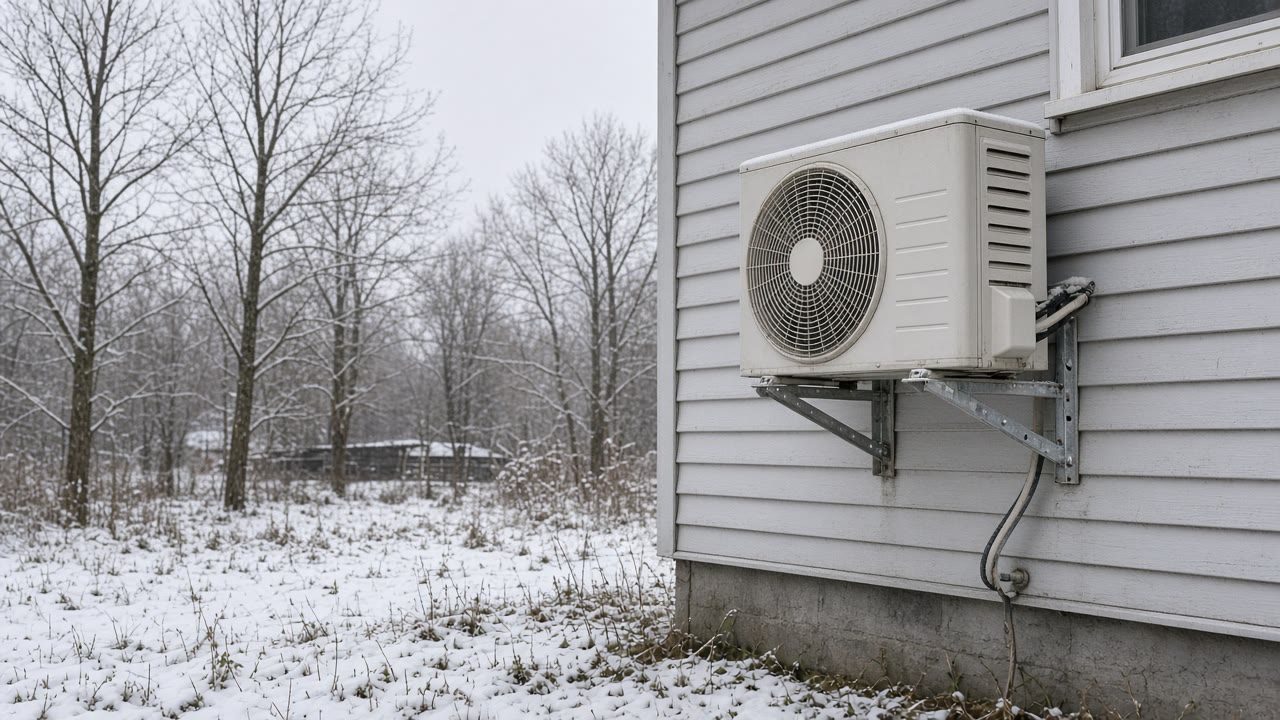
- Outdoor unit siting, mounting height and clearance for snow
- Electrical survey, panel capacity and the circuit for the outdoor unit
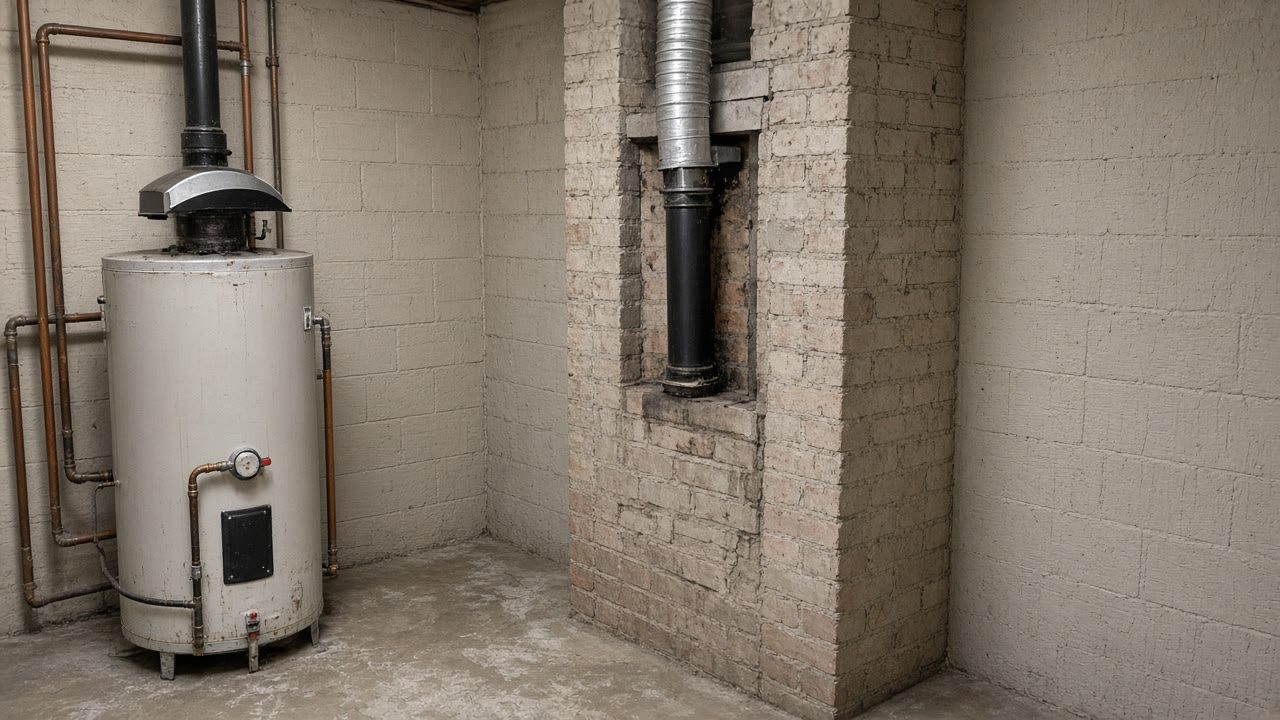
- Decommissioning of the existing fossil fuel appliance where that is the plan
- Documentation for the utility administered incentive program
- Permit application and, inside Skaneateles village, the electric heat instruction
- Air handler, coil and plenum work where the system is ducted
The numbers that decide a heat pump in this climate
A heat pump proposal is worth exactly as much as the numbers behind it at low temperature. These are the ones that decide what your winter actually looks like.
The outdoor temperature the design is worked to
There is no single New York design temperature: Table R301.2(1) of the Residential Code is published with its columns blank and each jurisdiction fills them in. Inside the city, section 27-54(a)(2) judges heating capability against minus ten degrees Fahrenheit. Two quotes worked to different assumed temperatures are answering two different questions.
Where the balance point lands, and what runs below it
The Department of Energy sets out four sizing approaches, from sizing for cooling with heating secondary through to meeting nearly all the heating need, and notes the first gives the warmest balance point and the last the coldest. With 7.1 nights a year at or below 0F but 57.5 at or below 20F, where that line sits decides how often the backup runs.
Capacity and efficiency at 5F, not at 47F
The ENERGY STAR cold climate criteria recorded by the Department of Energy are a coefficient of performance of at least 1.75 at 5F and heating capacity at 5F of at least 70 percent of rated capacity at 47F. Those two figures are published, comparable, and the only part of a heat pump proposal that can be set side by side honestly.
How far the machine can turn down
NYSERDA states that inverter driven heat pumps are most efficient inside their modulating zone, typically 40 to 80 percent of full capacity, and puts the efficiency penalty during low load cycling at as much as 25 percent. Turndown ratio is the specification nobody volunteers and it governs the shoulder season, which is most of the heating hours here.
Oversizing bites harder on a heat pump than on a furnace
NYSERDA says exactly that, and gives the thresholds: impacts begin at 120 percent of the building load and severe impacts can begin above 150 percent. The state's own heat pump program also makes sizing under Manual S from a Manual J load a condition, and reserves the right to ask for written justification of unusual values.
Which electric utility serves the address
The heat pump incentive program is administered by the electric utilities, National Grid across most of this metro. Solvay village and Skaneateles village run their own municipal electric systems, so anything electrical attached to the installation, including a service upgrade, goes through the village, and what reaches village customers is a question for the village.
What you are heating with today
One home in five in the town of Skaneateles heats from a tank on the property and Marcellus runs 9.1 percent on oil or bottled gas, the two highest rates in the county. Delivered fuel is the comparison a heat pump is most likely to win, and Solvay already has 41.4 percent of its homes on electric heat, which is a different starting point again.
Snow, and where the outdoor unit will stand
The snowfall normal is 123.8 inches a year with 92 inches of it falling across December, January and February. An outdoor unit has to be clear of drifted snow and clear of what falls off a roof, and its position and height are settled once, on the day it is installed.
Ask for the balance point, and the answer stops being an opinion
Seven nights a year at or below zero, fifty seven at or below twenty. Where that line falls is the whole conversation.
From the balance point to the commissioning
Decide what you want the machine to do
All of the heating, most of it with a backup, or cooling with heating as a bonus. The Department of Energy names these as four distinct sizing approaches and they lead to different equipment and different winters. Choosing deliberately is the step that is usually skipped.
Calculate the loads against a design temperature you can see
Heating and cooling both, measured rather than estimated, worked to a stated outdoor design temperature. NYSERDA instructs that a design temperature appropriate for the location must always be used and that ASHRAE and ACCA publish them by county and weather station. Ask which number was used.
Select on the low temperature numbers
Capacity and coefficient of performance at 5F, the turndown ratio, and whether the compressor is variable capacity. The cold climate specification requires three or more operating speeds or continuous variability, because a single speed machine cannot turn down and is the type most exposed to cycling at low load.
Check the electrical and the siting
Panel capacity, the circuit for the outdoor unit, and where that unit can stand clear of drifting snow and roof shed. In Solvay and Skaneateles villages the electrical counterparty is the village rather than the regional utility.
Paperwork before equipment
The permit where the municipality requires one, and the program documentation. New York State Clean Heat requires residential heat pumps to be sized under ACCA Manual S from loads calculated under ACCA Manual J, so the calculation is a condition of the program rather than an optional extra somebody can talk you out of.
Installation and commissioning
Indoor equipment set, line sets run and evacuated, the charge weighed in, the outdoor unit mounted at its agreed height, the controls configured and the changeover to the backup heat set to the balance point that was designed rather than to a default.
Inspection, handover and the incentive submission
The municipal inspection where a permit was pulled, and you should hold the load calculation, the equipment submittal showing capacity at low temperature, and whatever the program administrator needs.
What heat pump installation looks like
Whether a heat pump is the right purchase for your house
When you may not need this at all
- If your gas furnace is a few years old and heating the house, no New York law requires you to change it. Energy Law section 11-104 reaches new buildings and says in terms that the prohibition does not apply to existing buildings, and the Assembly's own explainer states that existing gas appliances can also be replaced with new gas appliances.
- If what you want is cooling and the heating is fine, a straight central air system is a simpler purchase and the heat pump conversation can wait until the heating appliance is actually due.
- If insulation or air sealing work is planned, do that first. NYSERDA advises asking what the homeowner intends over the next five to ten years, because the house you are about to have needs a smaller machine than the house you have now.
- Inside Skaneateles village, instruction 13 of the building permit instructions states that no building may use total electric heat where natural gas service is available, and that a building must meet the state energy code insulation standards before converting to or extending electric heat. Raise it with the village code office before equipment is ordered.
- If a unit is being recommended because it appears on the cold climate product list, that is not a sizing answer. The specification itself says that meeting the performance requirements does not necessarily make a product appropriate for every application, and that loads and capacities at design temperature still decide.
What is out of scope
- Diagnosing an existing heat pump that is not heating or not cooling.
- Electrical service and panel upgrades themselves, which are a licensed electrician's work, although the need for one is identified during the survey.
- Insulation, air sealing and window work, which changes the load and belongs before the equipment.
- Ground source and water source systems, which involve drilling or trenching the property.
- Any statement about whether your household will receive anything from any program.
- Projections of what the system will cost to run across a winter.
Heat pump work across Onondaga County
- Heat Pump Installation in Syracuse
- Heat Pump Installation in North Syracuse
- Heat Pump Installation in East Syracuse
- Heat Pump Installation in Liverpool
- Heat Pump Installation in Cicero
- Heat Pump Installation in Clay
- Heat Pump Installation in Salina
- Heat Pump Installation in DeWitt
- Heat Pump Installation in Manlius
- Heat Pump Installation in Fayetteville
- Heat Pump Installation in Camillus
- Heat Pump Installation in Baldwinsville
- Heat Pump Installation in Marcellus
- Heat Pump Installation in Skaneateles
- Heat Pump Installation in Solvay
What Syracuse homeowners ask about heat pumps
Do heat pumps actually work in Syracuse?
The useful version of that question is what happens on the coldest nights. The normals give 7.1 nights a year at or below 0F, four of them in January, against 57.5 nights at or below 20F. So the argument is about a handful of nights, and it is settled by the balance point, which the Department of Energy defines as the outdoor temperature at which capacity matches demand. Ask for that number and what covers the load underneath it.
What two numbers should I ask every contractor for?
Heating capacity at 5F as a share of capacity at 47F, and coefficient of performance at 5F. The cold climate criteria recorded by the Department of Energy are at least 70 percent and at least 1.75. Those are published federal figures rather than marketing, and they let two quotes be compared on the same basis.
Can I keep the furnace as a backup?
Yes, and it is a common arrangement here. The alternative backup is electric resistance heat, which the Department of Energy describes as an inefficient and typically expensive form of heat that should be minimized in all heat pump installations. Where the changeover is set matters as much as the equipment, which is why the balance point keeps coming up.
Is there still help with the cost?
The federal credit under section 25C ended for property placed in service after December 31, 2025. What remains is New York State Clean Heat, administered by the electric utilities, National Grid across most of this metro, with figures published per utility and revised by program year. We publish no amount here on purpose, because a stale incentive figure is a lie with a number attached. Have the contractor pull the current table for your utility zone before anything is signed.
Does it have to be ductless?
No. The cold climate specification publishes separate thresholds for ducted and non ducted systems, so both are recognized equipment types. Whether ducts are the right route depends on what the house already has and what condition it is in, which is an air distribution question rather than an equipment one.
Am I going to be forced off gas eventually?
Nothing in the current law does that to an existing house. The All Electric Buildings Act applies to new construction, the statute excludes existing buildings including their repair, alteration and addition, and the legislature's own plain English explainer says existing gas appliances can be replaced with new gas appliances. Anyone using a deadline as a reason to buy now is using one that does not apply to you.
Get the cold weather numbers before you get a price
Capacity at 5F, coefficient of performance at 5F, and what heats the house underneath the balance point.