
Furnace and Boiler Permits in Onondaga County, and Who Pulls Them
Your contractor pulls it, and whether one is needed is decided by your own city, town or village rather than by the state or by Onondaga County. Liverpool, Salina, Marcellus, Fayetteville, Cicero and the Town of Skaneateles all name heating equipment on their published permit lists. Camillus and Baldwinsville have adopted the state's optional exemption for replacing equipment, and that exemption turns on the equipment's listing rather than on your address.
Already know you need someone out? Call (315) 640-3590, answered 24/7.
Who does what on a permitted equipment replacement
You choose the contractor
You, before any paperwork existsAsk during the quote whether the permit is included, who files it and whether the fee is inside the price you were shown.
The application goes in
The contractor, at your city, town or village officeSeveral offices in this county want insurance certificates and a signed proposal with the application, and some want a survey. The requirements are published by each office.
The work is done
The installing contractorVillages including Skaneateles state that work shall not start until the Code Enforcement Officer has issued the permit.
The inspection closes it out
The code enforcement officer for that municipalityThis is the only independent look anybody takes at the install. Skaneateles village asks for at least 48 hours notice before an inspection is needed.
19 NYCRR 1203.3 requires every authority having jurisdiction to run a permit program; what it covers is set locally.
There is no New York State HVAC license, so the permit is your check
People ask us for a license number to look up, and for this trade in this state there usually is not one. The Department of State's Division of Building Standards and Codes states in its published FAQ that issues regarding local laws, zoning, and licensing of contractors or electricians are not handled by that division, and that in general every city, town, village and county is charged with administering and enforcing the Uniform Code and Energy Code within its jurisdiction. New York Business Express, the state's own portal for telling a business what it needs in order to operate, lists for a Heating, Ventilation and Air Conditioning Contractor only the federal requirement under Section 608 of the Clean Air Act, which covers technicians who work on stationary air conditioners and refrigeration systems and is what allows the purchase of refrigerant in bulk containers. It lists no state license for the trade at all. So what you can actually verify is local: insurance, the permit, and whatever your own municipality requires of the person filing it.
Inside the City of Syracuse the trade is licensed by the city itself
The city is the exception in this metro and it is a substantial one. Syracuse operates a Board of Mechanical Examiners which issues mechanical licenses in classes, and the classes describe the work. A Class A Master HVAC license entitles the holder to engage in the business of, and to secure permits for, installation, alteration, maintenance and repair of any heating, ventilating or air conditioning systems. Class B covers residential and medium sized commercial work up to stated equipment sizes, and Class C covers homes of not more than two families with air conditioning up to five tons, furnaces up to 200 MBH input and boilers up to 399 MBH. Earning one is not a formality: Class A requires a minimum of ten years experience, Class B and C a minimum of five, with one year defined as 2,000 hours, and a written examination passed at 70 percent. Examinations are held at the Division of Code Enforcement, 300 South State Street, 7th Floor, and the licensing telephone number on the application is (315) 448-8773. The city also publishes a List of HVAC Contractors by license class, though the copy we read is dated 2022, so treat it as a starting point and confirm with the office.
In the city, an HVAC permit is filed separately from everything else
This trips up homeowners doing a larger project, and it is simple once you know. The Central Permit Office lists residential construction permit categories covering additions and conversions, decks, driveways, fences, fenestration, interior remodels, new builds, pools, roofs, sheds and garages and the rest, and then states that all trade and fire prevention permits, giving HVAC, electrical, fire alarm and sprinkler as its examples, must be obtained separately. So a heating system replacement does not ride along inside a general building permit for a renovation. That office sits on the 1st floor of One Park Place, 300 South State Street. The practical version for a homeowner comparing bids: ask which permit is being pulled, by whom, and in which office, and if a contractor tells you a city job needs nothing, ask them to put that in writing next to the model number.
Camillus and Baldwinsville adopted the replacement exemption, and there is a catch in it
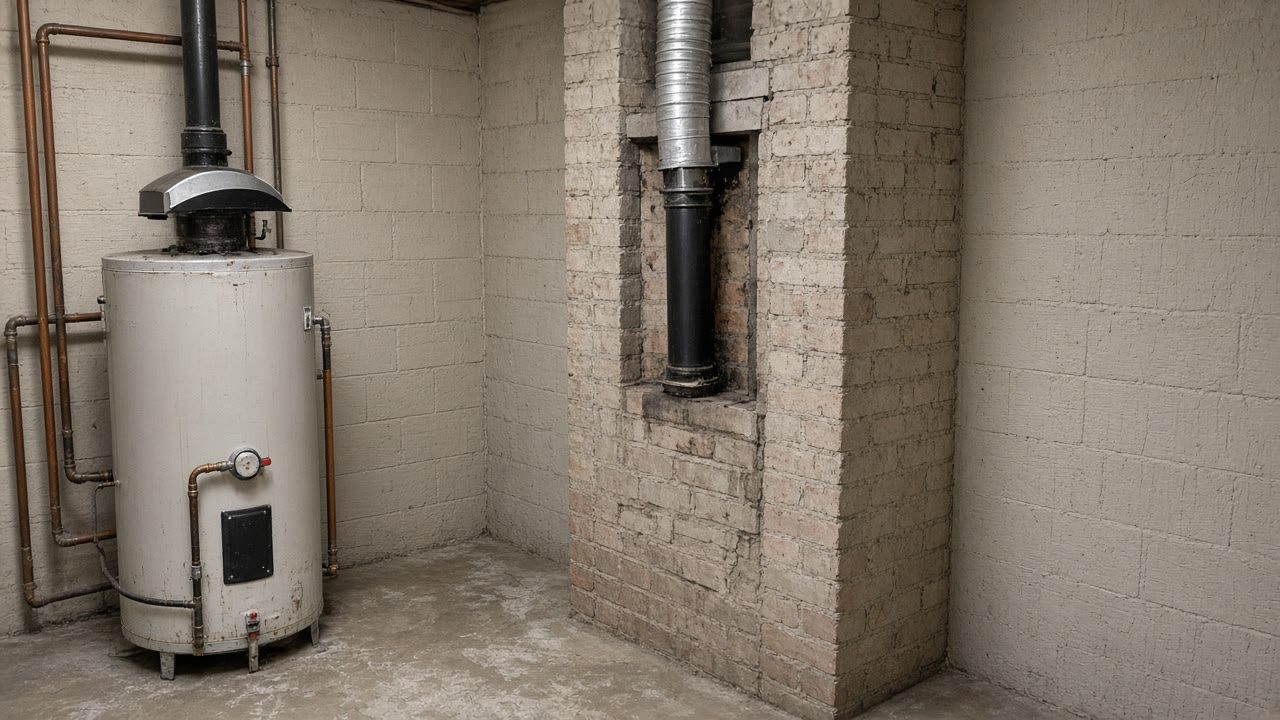
Two municipalities in this county have taken up an option the state offers, and the wording of it is the part that matters. 19 NYCRR 1203.3(a)(1) requires every authority having jurisdiction to require building permits for work that must conform to the Uniform Code or the Energy Code, and then allows, where expressly set out in the local program, exemption of listed categories. One of those categories is replacement of any equipment provided the replacement does not alter the equipment's listing or render it inconsistent with the equipment's original specifications. The Town of Camillus adopted that at section 26.30(B) of its Uniform Code Enforcement chapter, and the Village of Baldwinsville adopted it in a local law filed with the Department of State in June 2022. Read the condition again, because it is about the equipment and not about the address. Swapping an atmospherically vented furnace for a condensing furnace that vents out a side wall is not a like-for-like change in listing, and Oak Ridge National Laboratory's own description of that upgrade is that the existing vent cannot be used by the new furnace directly. Both local laws also restate that an exemption from the permit requirement is not an authorization for work to be performed in violation of the codes.
The towns and villages that name heating equipment outright
In much of this county there is no ambiguity at all, because the office has published the list. The Village of Liverpool names installation of any gas lines or appliance including space heaters, and installation of any new or replacement furnace, central air conditioning, boiler, gas fireplace or other heating equipment, and publishes separate HVAC, mechanical and heating appliance and chimney applications. The Town of Salina includes additions or new heating systems, solid fuel heating devices or gas inserts on its permit list, filed at the Department of Planning and Development. The Town of Marcellus names furnace installation on its project list and publishes a Heating Appliance Chimney Permit Application, at 22 East Main Street on 315-673-3269. The Village of Fayetteville lists installing or replacing a heating unit, fireplace, woodstove or other solid fuel burning device or chimney and vents, and wants notarized signatures on the application. The Town of Cicero requires one to install or replace any fireplace, woodstove or other solid fuel burning device, chimney, vents or heat producing devices, on 315-752-1180 extension 504. The Town of Skaneateles publishes a permit application headed Heat Producing Appliances, dated 2024.
Where the published list says nothing about heating, which is not the same as no
Silence on a web page is not an exemption, and this is where homeowners get caught assuming. The Village of Solvay publishes examples of projects requiring a building permit covering new buildings, additions, remodeling, pools, sheds, fences, decks, demolition and fireplaces and woodstoves, and furnaces, boilers and air conditioning are simply not named on it, so the village asks anyone unsure to call Code Enforcement on (315) 468-1679. The Town of Clay names building permits as a service area but publishes no schedule of the work that requires one, giving codes@townofclayny.gov and (315) 652-3800 extension 172 instead. The Town of DeWitt takes the broad approach, stating that with the exception of minor repairs a permit is needed to upgrade, modify or install any fixed or movable improvements to real property, with a signed estimate and a current survey required in the application. The Village of East Syracuse enforces the full code set including the Mechanical and Fuel Gas Codes from 204 North Center Street on 315-437-3541, and the Town of Manlius publishes the 2020 code set it enforces and takes applications online. In every one of those cases the answer is a phone call, not an inference.
North Syracuse, and why we send you to the village rather than the town
We owe you an admission on this one. We could not retrieve the Village of North Syracuse code enforcement page over a secure connection on the date we checked, the server failed the handshake at every address we tried, and we do not publish a source we cannot link. So there is no permit detail for the village on this site. What we can tell you is which office answers for the address, and that comes from the state: the Department of State states that in general every city, town, village and county administers and enforces the Uniform Code within its jurisdiction, which makes the village itself, rather than the surrounding towns of Cicero or Clay, the place a North Syracuse homeowner asks. If a contractor tells you a village address is handled by the town, that is worth checking before the work starts rather than afterwards.
What Skaneateles village wants in the envelope, and what that tells you about a bidder
One village in this county publishes exactly what an application has to contain, and the list doubles as a contractor screening tool anywhere. The Village of Skaneateles requires every application to include a current copy of the contractor's or homeowner's liability insurance and a current Workers Compensation Insurance Certificate or Exemption Certificate, citing section 125 of the General Municipal Law, plus a detailed copy of the job proposal or contract signed by the property owner including an accurate project cost. It states that work shall not start until the Code Enforcement Officer has issued a building permit, and that the officer must be given at least 48 hours notice before any inspection. The office is at 26 Fennell Street on 315-685-2118. Notice what that means in practice: a bidder who cannot produce a workers compensation certificate cannot be permitted in that village, whatever they say about price. Asking any contractor for those two documents early costs you nothing and answers a question you would otherwise be taking on trust.
Baldwinsville has adopted a stretch energy code, so ask the village what applies
One more Baldwinsville item, and we are flagging our own uncertainty on it deliberately. Local Law No. 7 of 2022 adopts, as the village's local energy conservation construction code, the State Energy Code modified in the manner contemplated by NYStretch Energy Code 2020 version 1.0, published by NYSERDA, applying to buildings constructed, substantially renovated or altered in the village on or after the law's effective date, with one carve out for a section that NYStretch would otherwise have added. The law's own section 3 makes enforceability contingent on a filing with the Department of State and a determination by the Code Council, and we have not verified the current enforcement status of that filing. So the accurate statement is that Baldwinsville has adopted a stretch energy code and the village code office is the place to confirm what it requires of a mechanical project today. It is a short call and it is better made before a contract is signed than after an inspection.
What the permit is buying you that the cheapest bid is not
Two things, and neither is the piece of paper. The first is the inspection, which is the only independent look anyone takes at work that will sit behind a cabinet or above a ceiling for the next twenty years, and which you cannot buy separately at any price. The second is a filter on who can bid, because a permit requires credentials and insurance that the cheapest number on your table may not have. There is a third benefit that is easy to miss: the energy code carries the equipment sizing requirement, so a job running through the permit process is a job where somebody official has reason to ask how the size was arrived at, which is the subject of our sizing guide. What nobody here can do is tell you whether your specific job at your specific address needs a permit. That determination belongs to your code official, the offices and numbers above are published by the municipalities themselves, and the call is short. When you are ready for quotes from contractors who file the paperwork as a matter of course, send us the address and the equipment you are replacing.
Sources used in this guide
The New York State Department of State's Division of Building Standards and Codes states in its published frequently asked questions that issues regarding local laws, zoning, and licensing of contractors or electricians are not handled by this Division, and that licensing of home inspectors and of electricians involved with installing security and fire alarm systems is done through the Department of State's Division of Licensing Services. It also states that in general every city, town, village and county is charged with administering and enforcing the Uniform Code and Energy Code within its jurisdiction.
Source: New York State Department of State, Division of Building Standards and Codes, Frequently Asked Questions, accessed 2026-09-14
New York Business Express, the state's own portal for telling a business what it needs in order to operate, lists for a Heating, Ventilation and Air Conditioning Contractor only federal requirements under Section 608 of the Clean Air Act. It states that all technicians who work on stationary air conditioners and refrigeration systems must hold certification under Section 608, that the exam covers proper handling of refrigerants and knowledge of EPA refrigerant regulations, that there are four areas of certification, Type I for small appliances, Type II for high pressure refrigerants, Type III for low pressure refrigerants and Universal, that exams must be administered by organizations approved by the US EPA, and that only holders of that certification can purchase refrigerant in bulk containers or pre-charged parts. It lists no New York State license for the trade.
Source: New York Business Express, the State of New York's official business requirements portal, Heating, Ventilation and Air Conditioning (HVAC) Contractor, accessed 2026-09-14
The City of Syracuse operates a Board of Mechanical Examiners that issues mechanical licenses, and the application defines what each class permits. A Class A Master HVAC Mechanical License entitles the holder to engage in the business of, and to secure permits for, the installation, alteration, maintenance and repair of any heating, ventilating or air conditioning systems and equipment. A Class B Limited HVAC Mechanical License covers the same work in new or existing residential structures including one and two family and multiple dwellings, and medium sized commercial buildings using a maximum of 30 ton air conditioning units, boilers up to 2,000 MBH input, furnaces up to 500 MBH input, and chillers, cooling towers or evaporative coolers up to 100 tons, with maintenance and repair of larger equipment also permitted. A Class C Residential HVAC Mechanical License covers structures used only as the home of not more than two distinct families, and small commercial buildings up to 2,500 square feet, with air conditioning up to a maximum of 5 tons, furnaces up to 200 MBH input and boilers up to 399 MBH input.
Source: City of Syracuse, Board of Mechanical Examiners, Mechanical License Application, published by the City of Syracuse Division of Code Enforcement, accessed 2026-09-14
The City of Syracuse Board of Mechanical Examiners requires a minimum of ten years of experience for a Class A Master Mechanical License, of which five years must have been working directly on installation and maintenance of the equipment and systems for the class applied for and three of those five on new construction of commercial or industrial installations. Class B and Class C require a minimum of five years of experience directly related to the heating, ventilating and air conditioning industry, of which at least three years must have been working directly on installation and maintenance of those systems. One year of experience is defined as 2,000 hours. Proof may be W2 forms, educational certificates, letters from previous employers, or 1040 forms for the self employed, and is reviewed at a personal qualification review session. A mechanical license is granted by the Board on attaining a minimum score of 70 percent on the written examination. Examinations are held at the Division of Code Enforcement, 300 South State Street, 7th Floor, Syracuse, NY 13202, and the application lists the licensing department telephone number as (315) 448-8773.
Source: City of Syracuse, Board of Mechanical Examiners, Mechanical License Application, instructions to the applicant, published by the City of Syracuse Division of Code Enforcement, accessed 2026-09-14
The City of Syracuse Code Enforcement publishes a document headed List of HVAC Contractors, showing each firm's name, address, telephone number and owner name grouped under license headings including Master HVAC Mech, Limited HVAC Mech and Special HVAC, together with refrigeration classes such as Master Refrigeration, R Limited Refrigeration, S Limited Refrigeration and V Special Tank and Piping. The copy published at the address recorded here runs to 25 pages and is dated 3/28/22 on every page.
Source: City of Syracuse Code Enforcement, List of HVAC Contractors, report WEB033L, accessed 2026-09-14
The City of Syracuse Central Permit Office lists its residential construction permit categories as addition or conversion, change of occupancy, deck, porch, gazebo and pergola for new work and for repairs, driveway, fence, fenestration, interior remodel and renovation, miscellaneous residential project, new build, pool and hot tub, ramp, retaining wall, roof, shed and garage, sheetrock and temporary structure. The page states that all trade and fire prevention permits, giving HVAC, electrical, fire alarm and sprinkler as its examples, must be obtained separately. The office is at One Park Place, 300 South State Street, 1st Floor, Syracuse, NY 13202.
Source: City of Syracuse, Central Permit Office, Residential Construction Permits, accessed 2026-09-14
19 NYCRR 1203.3(a)(1) requires every authority having jurisdiction to include in its code enforcement program provisions requiring building permits for work that must conform to the Uniform Code or the Energy Code. It then allows, where expressly set forth in the local program, exemption of listed categories of work. Three of those categories touch heating and cooling work: item (vi), installation of listed portable electrical, plumbing, heating, ventilation or cooling equipment or appliances; item (vii), replacement of any equipment provided the replacement does not alter the equipment's listing or render it inconsistent with the equipment's original specifications; and item (viii), repairs, provided the work does not affect any part of the structural system, the required means of egress, or the fire protection system. The regulation adds that an exemption from the requirement to obtain a building permit is not an authorization for work to be performed in violation of the Codes.
Source: New York Codes, Rules and Regulations, Title 19, section 1203.3(a)(1), Minimum features of a program for administration and enforcement, via the Legal Information Institute, Cornell Law School, accessed 2026-09-14
The Town of Camillus Chapter 26, Uniform Code Enforcement, revised 4/14/2026, states at section 26.30(A) that a building permit is required for any work which must conform to the Uniform Code or Energy Code, including the construction, enlargement, alteration, improvement, removal, relocation or demolition of any building or structure, and the installation of a solid fuel burning heating appliance, chimney, or flue in any dwelling unit. Section 26.30(B) then adopts the optional exemptions, including item 5, installation of listed portable electrical, plumbing, heating, ventilation or cooling equipment or appliances, and item 6, replacement of any equipment provided the replacement does not alter the equipment's listing or render it inconsistent with the equipment's original specifications. Section 26.30(C) states that the exemption is not an authorization for work to be performed in violation of the Uniform Code or the Energy Code.
Source: Town of Camillus, New York, Chapter 26 Uniform Code Enforcement, sections 26.30 and 26.39, revision dated 4/14/2026, accessed 2026-09-14
The Village of Baldwinsville local law filed with the New York State Department of State states that a building permit shall be required for any work which must conform to the Uniform Code or the Energy Code, including the installation of a solid fuel burning heating appliance, chimney, or flue in any dwelling unit, and then lists the exemptions the village has adopted. They include installation of listed portable electrical, plumbing, heating, ventilation or cooling equipment or appliances, and replacement of any equipment provided the replacement does not alter the equipment's listing or render it inconsistent with the equipment's original specifications. The law adds that the exemption is not an authorization for work to be performed in violation of the Uniform Code or the Energy Code, and that no person shall commence work requiring a permit without first obtaining one from the Village Code Enforcement Officer.
Source: Village of Baldwinsville, New York, local law filed with the New York State Department of State, Division of Corporations, State Records and Uniform Commercial Code, filed June 9, 2022, accessed 2026-09-14
Local Law No. 7 of 2022 of the Village of Baldwinsville adopts, as the village's local energy conservation construction code, the State Energy Code as modified in the manner contemplated by NYStretch Energy Code 2020, Version 1.0, dated July 2019, published by NYSERDA. Section 3 of the local law states that the local energy conservation construction code shall be applicable to all buildings constructed, substantially renovated, or altered in the village on or after the effective date of the law, and to all additions made on or after that date. The law records one carve out: section R403.6.2, added to the 2018 IECC by section 3.11 of NYStretch, shall not be deemed to be added. Section 3 also records the Energy Law section 11-109(2) filing condition that governs whether and when the local code is enforceable.
Source: Village of Baldwinsville, New York, Local Law No. 7 of 2022, A local law adopting as its energy conservation code the State Energy Code as modified in the manner contemplated by NYStretch, filed with the New York State Department of State June 9, 2022, accessed 2026-09-14
The Village of Liverpool states that it uses the most recent edition of the New York State Uniform Code and that a building permit is required for any work which must conform to the Uniform Code, the Energy Code and the Village Zoning Ordinance. Its published list of such work names installation of any gas lines or appliance including space heaters, and installation of any new or replacement furnace, central air conditioning, boiler, gas fireplace or other heating equipment. The village publishes a separate HVAC Permit Application, Mechanical Permit Application and Heating Appliance and Chimney Application. It states that no person shall commence any work for which a building permit is required without first having obtained one from the Code Official.
Source: Village of Liverpool, New York, Building Safety and Code Enforcement, accessed 2026-09-14
The Town of Salina publishes a list of work requiring a permit. It includes any new building, all additions to existing buildings, pools, sheds, fences, decks and porches, additions to electrical systems including installing generators, additions to plumbing systems, additions or new heating systems, solid fuel heating devices or gas inserts, and demolition. Building permits are obtained at the Department of Planning and Development office during business hours.
Source: Town of Salina, New York, Department of Planning and Development, Building Permits, accessed 2026-09-14
The Town of Marcellus codes office states that under Town of Marcellus Local Law No. 3 of 2007 a building permit is required for work that must conform to the Uniform Code or the Energy Code, including the construction, enlargement, alteration, improvement, removal, relocation or demolition of any building or structure. Its published project list names furnace installation and fireplaces and alternative fuel heating devices, and it publishes a Heating Appliance Chimney Permit Application. The Town Hall is at 22 East Main Street, Marcellus, NY 13108, telephone 315-673-3269, open 8:30 AM to 4:00 PM Monday to Friday.
Source: Town of Marcellus, New York, Codes Office, Building Projects, accessed 2026-09-14
The Village of Fayetteville publishes a list of projects that require a permit which includes installing or replacing a heating unit, fireplace, woodstove, or other solid fuel burning device or chimney and vents. The village instructs applicants to obtain the application from the Office of Code Enforcement, to complete all applicable sections, and states that all applicable parties must provide notarized signatures on the application. The Village of Fayetteville is at 425 East Genesee Street, Fayetteville, NY 13066, telephone (315) 637-9864.
Source: Village of Fayetteville, New York, How to Apply for a Permit, Office of Code Enforcement, accessed 2026-09-14
The Town of Cicero Department of Zoning and Planning publishes the work for which a building permit is required. Its list includes construct, add onto, relocate or make structural changes to a building or property, and install or replace any fireplace, woodstove or other solid fuel burning device, chimney, vents or heat producing devices. The town lists making ordinary repairs, and installing or replacing siding or roofing where no more than two layers of roofing are to be covered, as not requiring a permit, and instructs anyone in doubt to call the Office of Zoning and Planning for clarification. The department telephone number is 315-752-1180, extension 504.
Source: Town of Cicero, New York, Department of Zoning and Planning, accessed 2026-09-14
The Town of Skaneateles Building and Codes Department publishes a set of permit applications, among them a permit application headed Heat Producing Appliances, dated 2024. The Codes Enforcement Officer is named as Robert G Herrmann Jr, reachable at codes@townofskaneateles.com, office (315) 685-0833, with office hours Monday to Friday, 8 am to 4 pm.
Source: Town of Skaneateles, New York, Building and Codes Department, accessed 2026-09-14
The Village of Solvay publishes examples of projects requiring a building permit: any new buildings, all additions, remodeling and interior renovations, pools and hot tubs, sheds and garages, fences, decks and porches, demolition, and fireplaces and woodstoves. Furnaces, boilers, heating systems and air conditioning are not named on that published list. The village states that anyone unsure whether a project needs a permit should call the Code Enforcement Department at (315) 468-1679, that inspections are required during each stage of construction, and that the property owner must sign the application whoever files it.
Source: Village of Solvay, New York, Building Permits, accessed 2026-09-14
The Town of Clay Department of Codes page names building permits as one of its service areas but does not publish a schedule of the work that requires one. It gives the commissioner as Joseph Grispino, an email address of codes@townofclayny.gov and a telephone number of (315) 652-3800 extension 172.
Source: Town of Clay, New York, Department of Codes, accessed 2026-09-14
The Town of DeWitt states that with the exception of minor repairs, a permit is needed to upgrade, modify, or install any fixed or movable improvements or structures to real property, and advises contacting the Planning and Zoning office where there is any doubt. A complete application includes the permit application form, a copy of a current survey, with photographs not accepted, a signed estimate, and the permit fee determined using the fee schedule.
Source: Town of DeWitt, New York, Department of Planning and Zoning, Permits, accessed 2026-09-14
The Village of East Syracuse Building and Code Enforcement department states that it administers and enforces the Property Maintenance, Building, Residential, Fire, Existing Building, Energy Conservation, Plumbing, Fuel Gas and Mechanical Codes, carries out inspections to assure compliance, and issues permits. The office is at 204 North Center Street, East Syracuse, NY 13057, telephone 315-437-3541 option 2. The Village Clerk's Office accepts permit applications Monday to Friday from 7:30 am to 4:00 pm, while code enforcement and the inspectors work 8:30 am to 5:00 pm, and the village advises email contact because staff are frequently out on inspections.
Source: Village of East Syracuse, New York, Building, Code Enforcement, Planning and Zoning, accessed 2026-09-14
The Town of Manlius Planning and Development Department publishes the code set it enforces as the 2020 New York State Uniform Code and Energy Code, effective May 12, 2020, naming the Residential Code, Fuel Gas Code, Plumbing Code, Mechanical Code, Fire Code, Energy Conservation Construction Code, Property Maintenance Code, Building Code and Existing Building Code. The department is at 301 Brooklea Drive, Fayetteville, NY 13066, telephone 315-637-8619, and accepts residential and commercial construction permit applications online, with two complete sets of plans, the permit fee, a survey and a workers compensation form or BP-1 waiver due within three business days of an online submission.
Source: Town of Manlius, New York, Planning and Development Department, Building Standards and Codes, accessed 2026-09-14
This ledger carries no permit source for the Village of North Syracuse. The village's code enforcement page could not be retrieved over HTTPS on the date of this check: the server failed the TLS handshake for every address tried, so there is no secure published source to cite. The governing position is the state's: the New York State Department of State states that in general every city, town, village and county is charged with administering and enforcing the Uniform Code and Energy Code within its jurisdiction, which makes the village, not the town of Cicero or Clay around it, the office that answers for a North Syracuse address.
Source: Ledger finding on 2026-09-14, recorded against the New York State Department of State, Division of Building Standards and Codes, Frequently Asked Questions, accessed 2026-09-14
The Village of Skaneateles building permit instructions state that all applications must include a current copy of the contractor's or homeowner's liability insurance and a current copy of a Workers Compensation Insurance Certificate or Exemption Certificate, citing section 125 of the General Municipal Law, and that all applications must include a detailed copy of the job proposal or contract signed by the property owner for the work to be performed including an accurate project cost. The instructions also state that work shall not start until the Code Enforcement Officer has issued a building permit, and that the Code Enforcement Officer shall be notified at least 48 hours in advance of any work requiring site inspections. The office is at 26 Fennell Street, Skaneateles, NY 13152, telephone 315-685-2118.
Source: Village of Skaneateles, New York, Building Permit application and Instructions to Applicants for Building and Zoning Permits, accessed 2026-09-14
Oak Ridge National Laboratory states that in every upgrade of this kind the existing Category I noncondensing furnace is served by a negative static pressure vent, for example a clay tile lined masonry chimney or a Type B double-wall metal chimney terminating above the roof, and that this existing vent cannot be used by the Category IV condensing furnace directly. It describes the options as reusing the existing vertical vent as a chase for the new venting system, installing a new horizontal side-wall vent system where physical constraints and codes allow, or running a new vertical vent through the building, which it calls difficult and costly. It states that in all of these cases there are added costs compared with a like-for-like noncondensing furnace replacement.
Source: Oak Ridge National Laboratory, ORNL/TM-2014/624, section 2.3.1, October 2014, accessed 2026-09-14
Services this guide relates to
Need someone to look at it?
Send the details and we will come back to you.