
Boiler Replacement in North Syracuse's Hydronic Minority
A boiler house in this village is in the minority, and that is exactly why the survey matters more than the model number.
Boiler Replacement quote in North Syracuse
Share a few details so we can confirm coverage and arrange the right next step.
Would you rather talk it through? Call (315) 640-3590, answered 24/7.
$100 off your first job
Credited by us on your first booked job.
- One credit per customer per property, on your first booked job.
- Valid through December 31, 2026.
Mention this offer when you book. Full terms.
What the North Syracuse fuel table still records
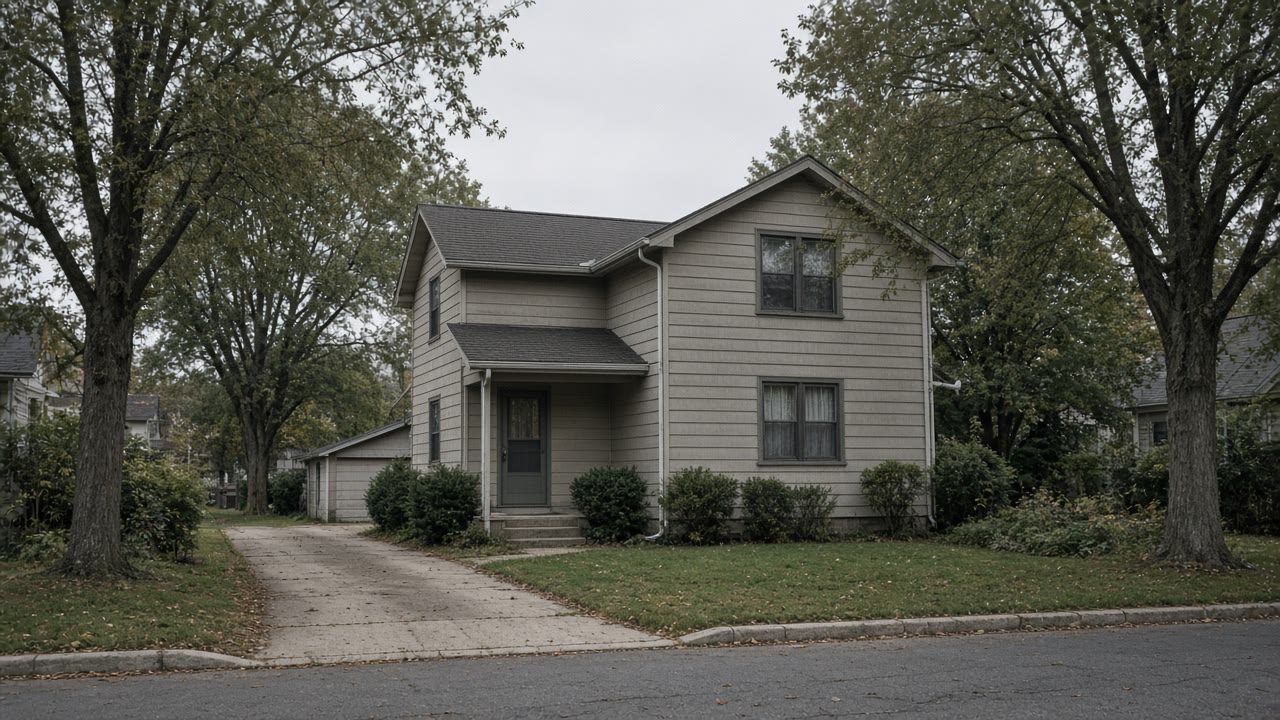
Of 2,990 occupied housing units in North Syracuse village, the American Community Survey 2020-2024 five-year estimates report 2,186 heated with utility gas, 73.1 percent, 624 with electricity, 20.9 percent, 66 with bottled, tank or LP gas, 2.2 percent, and 29 with coal. Of the occupied units, 2,010, 67.2 percent, are owner occupied.
Source: US Census Bureau, American Community Survey 2020-2024 5-year estimates, tables B25040 House Heating Fuel and B25003 Tenure, North Syracuse village, New York, accessed 2026-09-14
This ledger carries no permit source for the Village of North Syracuse. The village's code enforcement page could not be retrieved over HTTPS on the date of this check: the server failed the TLS handshake for every address tried, so there is no secure published source to cite. The governing position is the state's: the New York State Department of State states that in general every city, town, village and county is charged with administering and enforcing the Uniform Code and Energy Code within its jurisdiction, which makes the village, not the town of Cicero or Clay around it, the office that answers for a North Syracuse address.
Source: Ledger finding on 2026-09-14, recorded against the New York State Department of State, Division of Building Standards and Codes, Frequently Asked Questions, accessed 2026-09-14
Section M1801.3 of the Residential Code of New York State applies where an appliance is permanently disconnected from an existing chimney or vent, or connected to an existing chimney or vent during a new installation. M1801.3.1 requires the chimney or vent to be resized as necessary to control flue gas condensation in its interior and to provide the appliance or appliances served with the required draft, with resizing for oil-fired appliances vented to masonry chimneys done in accordance with NFPA 31. M1801.3.2 requires the flue gas passageway to be free of obstructions and combustible deposits, to be cleaned if previously used for a solid or liquid fuel-burning appliance or fireplace, and the flue liner or inner wall to comply. M1801.3.3 requires a cleanout opening in masonry chimneys and M1801.3.4 sets clearance to combustibles.
Source: Residential Code of New York State, sections M1801.3 through M1801.3.4, Existing chimneys and vents, via UpCodes, accessed 2026-09-14
What the village's coal and gas figures say about the flue
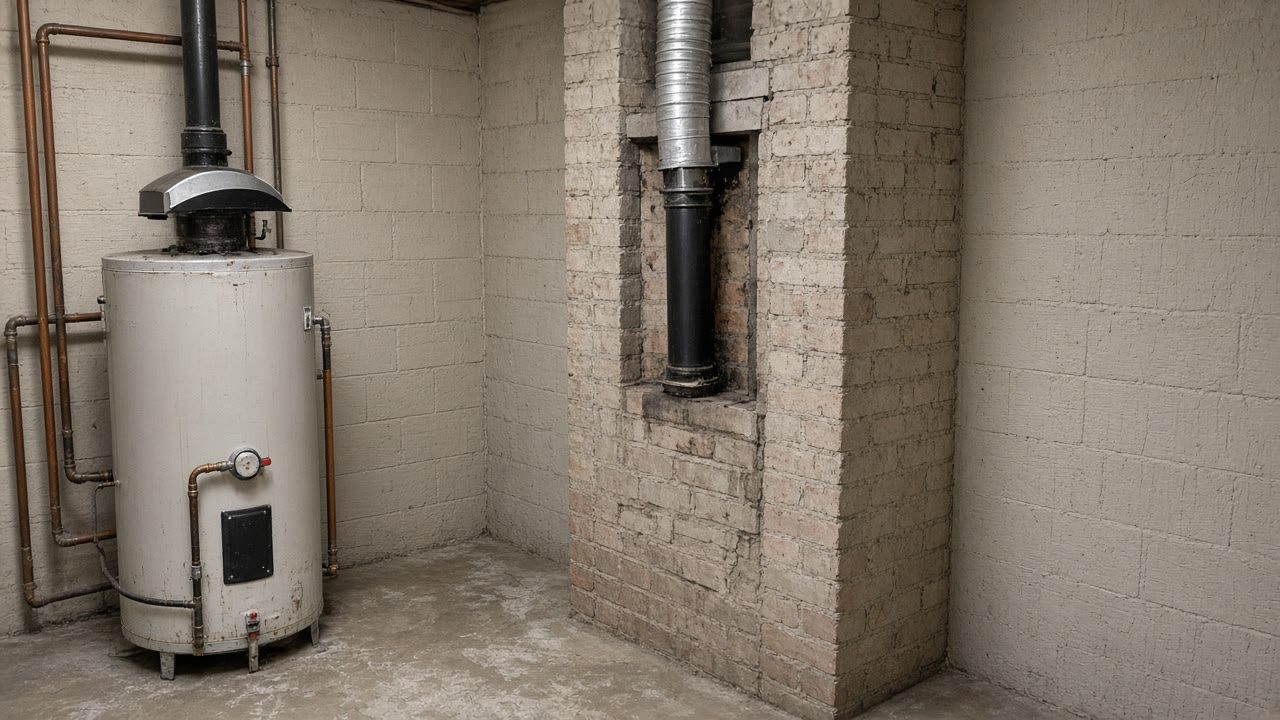
North Syracuse is forced air country, which is what makes a hydronic house here worth treating carefully rather than generically. The village's own Census figures still record 29 occupied homes heated with coal alongside 2,186 on utility gas, and a flue built to carry a solid fuel appliance is not the flue a modern gas boiler wants. New York's residential code addresses that directly: section M1801.3 applies where an appliance is disconnected from an existing chimney or connected to one during a new installation, and requires the flue gas passageway to be cleaned where it was previously used for a solid or liquid fuel burning appliance. That is a scope item, and it is one a thin quote skips.
What a North Syracuse boiler proposal has to cover
The paperwork route is the village's, and we cannot tell you what it asks. The North Syracuse code enforcement page could not be retrieved over a secure connection when this ledger was compiled, so we have no published source to quote and will not invent one; the state's position is that the village administers the Uniform Code for its own addresses, which makes the village office the place to put the question. Ask it early, because a boiler is the appliance most likely to need a chimney decision alongside it, and the answer changes the sequence of the work rather than just the cost. Get whatever the village tells you written into the scope before the appliance is ordered.
Steam or hot water, said out loud
They differ in the piping, the controls and the venting. A proposal that does not name yours was not written about your house.
What the chimney carried before
New York's code requires the flue gas passageway to be cleaned where a chimney was previously used for a solid or liquid fuel appliance, and resized as necessary when the appliance changes.
The village office, contacted early
This ledger holds no secure published source for what North Syracuse asks of heating work, so the village is the only reliable answer and the call should come before the order.
Get the chimney into the boiler scope
Tell us what the flue has carried over the years and we will make sure it is priced rather than assumed.
The other four jobs we arrange in North Syracuse
Radiator and boiler questions from the village
Most local contractors talk about furnaces. Does that matter?
It matters for who you invite. The Energy Information Administration puts 27.9 percent of Middle Atlantic homes on steam or hot water against 7.5 percent nationally, so hydronic work is normal in this region even where it is a minority on your street. What you want is somebody who surveys every radiator rather than the boiler room alone.
My chimney used to serve a coal furnace. Is that a problem?
It is a question for the installer rather than a verdict. Section M1801.3 of the Residential Code of New York State requires a flue gas passageway to be free of obstructions and combustible deposits and to be cleaned where it was previously used for a solid or liquid fuel burning appliance. Ask whether that is inside the price.
Radiators in a forced air village
Send the address and we will find people who work in hydronic houses rather than around them.