
Ductwork and Air Distribution in Liverpool Village
Liverpool's permit list is written around appliances and gas lines, so duct work is the one part of this trade the village has not settled in print.
Ductwork quote in Liverpool
Share a few details so we can confirm coverage and arrange the right next step.
Would you rather talk it through? Call (315) 640-3590, answered 24/7.
$100 off your first job
Credited by us on your first booked job.
- One credit per customer per property, on your first booked job.
- Valid through December 31, 2026.
Mention this offer when you book. Full terms.
Where ducts sit in Liverpool's published permit wording
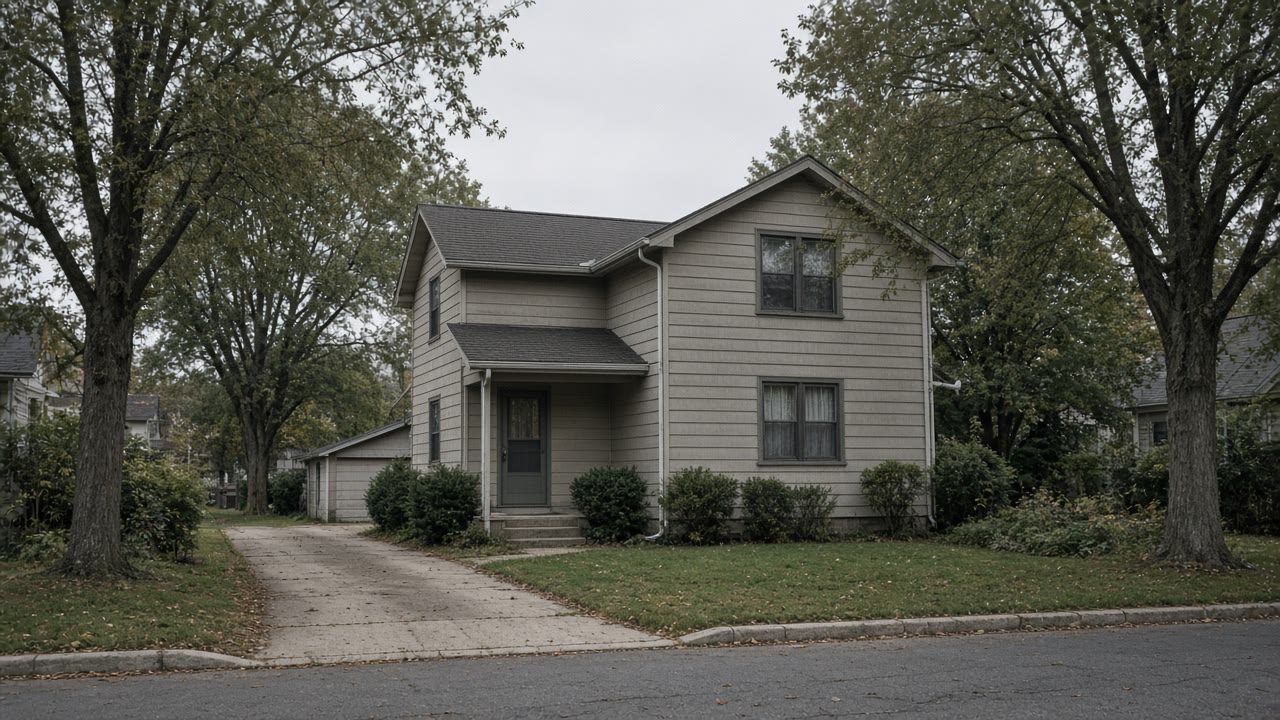
The Village of Liverpool states that it uses the most recent edition of the New York State Uniform Code and that a building permit is required for any work which must conform to the Uniform Code, the Energy Code and the Village Zoning Ordinance. Its published list of such work names installation of any gas lines or appliance including space heaters, and installation of any new or replacement furnace, central air conditioning, boiler, gas fireplace or other heating equipment. The village publishes a separate HVAC Permit Application, Mechanical Permit Application and Heating Appliance and Chimney Application. It states that no person shall commence any work for which a building permit is required without first having obtained one from the Code Official.
Source: Village of Liverpool, New York, Building Safety and Code Enforcement, accessed 2026-09-14
The American Community Survey 2020-2024 five-year estimates report the median year structure built in Liverpool village as 1939 or earlier. Of 1,344 housing units, 675 were built in 1939 or earlier, 50.2 percent, 812 in 1949 or earlier, 60.4 percent, and 1,194 before 1980, 88.8 percent. Of 1,277 occupied units, 898 are heated with utility gas, 70.3 percent, and 338 with electricity, 26.5 percent. 803 of the occupied units, 62.9 percent, are owner occupied.
Source: US Census Bureau, American Community Survey 2020-2024 5-year estimates, tables B25034, B25035, B25040 and B25003, Liverpool village, New York, accessed 2026-09-14
NYSERDA describes low-load cycling as what happens when the minimum capacity of the system is higher than the load of the home, so that the system repeatedly cycles on and off, which it says results in inefficient operation, high energy bills and increased wear to the mechanical components. It states that constant cycling stresses the equipment and increases wear and tear, which can lead to premature breakdown of components such as fans, the compressor or valves. It also states that an oversized system can push hot or cold air towards the thermostat before it mixes evenly into the space, so the system falsely senses the setting is satisfied and shuts off early, leading to uneven air temperatures throughout the house.
Source: New York State Energy Research and Development Authority, Air Source Heat Pumps: Don't Oversize, sections headed Operational Issues, Comfort and Shorter Equipment Lifespan, accessed 2026-09-14
The Cold Climate Air Source Heat Pump Specification Version 4.0, facilitated by Northeast Energy Efficiency Partnerships and effective January 1, 2023, defines a voluntary set of performance and reporting requirements designed to identify air-source heat pumps that heat efficiently in cold climates, which it defines as IECC climate zone 4 and higher. For central air conditioning heat pumps it requires a coefficient of performance at 5F of at least 1.75 at maximum capacity operation, HSPF2 of at least 8.5 and SEER2 of at least 15 for non-ducted systems, and HSPF2 of at least 7.7 and SEER2 of at least 14.3 for ducted systems. It requires the compressor to be variable capacity, meaning three or more distinct operating speeds or continuously variable, and requires units to hold a rating under AHRI Standard 210/240. It states that the specification is intended as a model equipment specification used by energy efficiency program administrators as a minimum requirement for program qualification.
Source: Northeast Energy Efficiency Partnerships, Cold Climate Air Source Heat Pump Specification (Version 4.0), effective January 1, 2023, accessed 2026-09-14
What the Liverpool permit list does not mention
The village that names furnaces, boilers and central air conditioning on its permit list says nothing on that list about ducts. That is not a loophole and it is not a permission; it is a reason to telephone the Code Official and ask what a distribution job at your address needs, because duct alterations in an existing house sit inside the Uniform Code and the Energy Code whether or not they are printed on a summary page. Ask it early. In a village where 675 of 1,344 homes were built in 1939 or earlier, duct work is often the largest and most disruptive part of a system project, and knowing the paperwork before the ceilings are opened is worth a five minute call.
Working out what a Liverpool distribution job really is
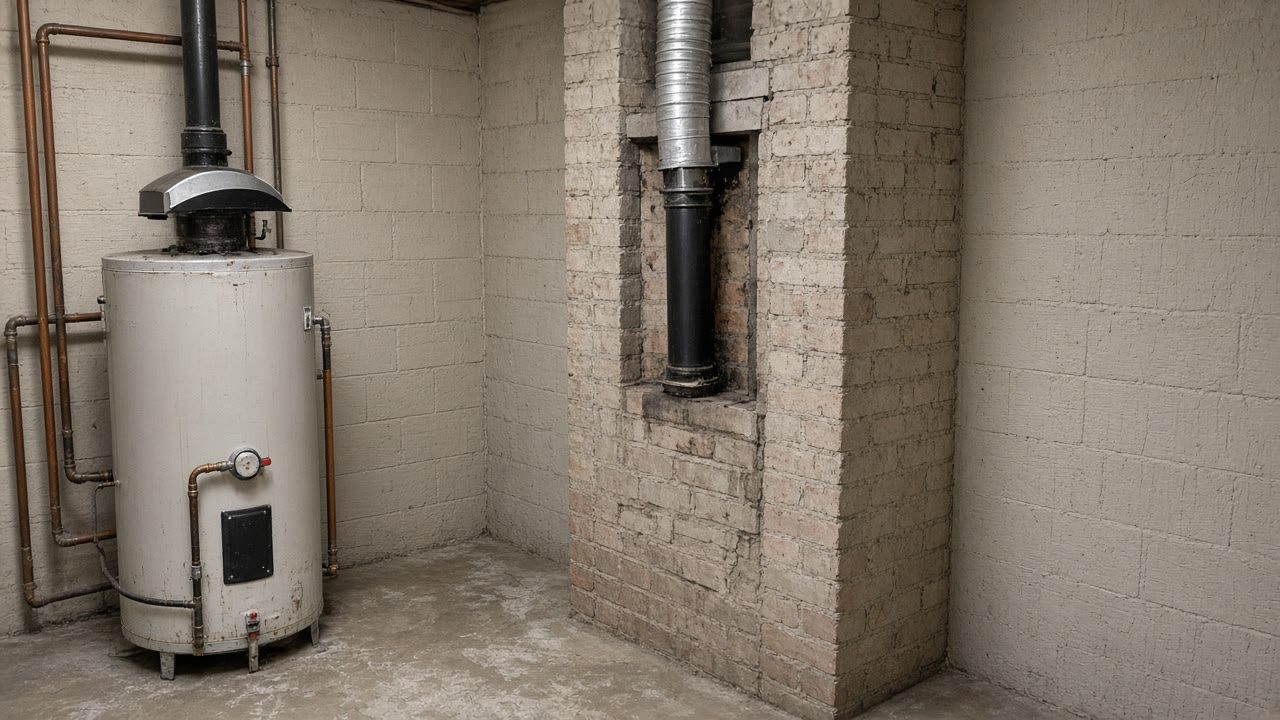
The building is the other half. Prewar housing rarely has a chase to run a trunk through, so the honest survey produces two costed options: a duct route with the ceilings and closets named, or ductless equipment reaching the rooms that actually fail. Both are legitimate, and the cold climate specification publishes separate performance thresholds for ducted and non ducted systems, so a head is a recognized class rather than a compromise. Before either, rule out the equipment: NYSERDA describes an oversized system pushing air at the thermostat before it mixes into the room, which produces the uneven temperatures people blame on ducts and which no amount of new metal will fix.
Call the village about the duct scope
The published list covers appliances and gas lines, not ducts, which makes the Code Official the place to settle it rather than a summary page.
Two options, both costed
A duct route with named openings, or ductless heads in the rooms that fail. A contractor who only sells one has narrowed the question early.
Rule out the sizing first
Short cycling on an oversized system produces the same uneven rooms as a bad duct layout, and only one of the two is cured by opening a ceiling.
Get both routes priced, not just the one
Tell us which rooms fail and we will arrange somebody who costs the duct and the ductless answer.
Other work we arrange across Liverpool village
Duct and airflow questions from Liverpool
The village lists furnaces but not ducts. Does that mean no permit?
It means the published list does not answer it, which is not the same thing. Duct work in a standing house sits inside the Uniform Code and the Energy Code, and what your particular job needs is the Code Official's determination. Telephone the village before the scope is agreed.
Half my house is comfortable and half is not. Where do I start?
With the walk rather than the quote: which rooms fail, in which season, with the doors open and with them closed. That narrows it to distribution or to equipment, and the two have completely different remedies. Opening ceilings to fix a sizing problem is the expensive way to learn that.
Send the room, the season and the house
That is enough for a Liverpool installer to say whether this is distribution work or a sizing problem.