
Ductwork and Air Distribution in Syracuse's Prewar Housing
In a city house the route is the price. Plaster, narrow joist bays and a finished basement decide where air can go long before anyone picks a register.
Ductwork quote in Syracuse
Share a few details so we can confirm coverage and arrange the right next step.
Would you rather talk it through? Call (315) 640-3590, answered 24/7.
$100 off your first job
Credited by us on your first booked job.
- One credit per customer per property, on your first booked job.
- Valid through December 31, 2026.
Mention this offer when you book. Full terms.
What to work out before anyone opens a city ceiling
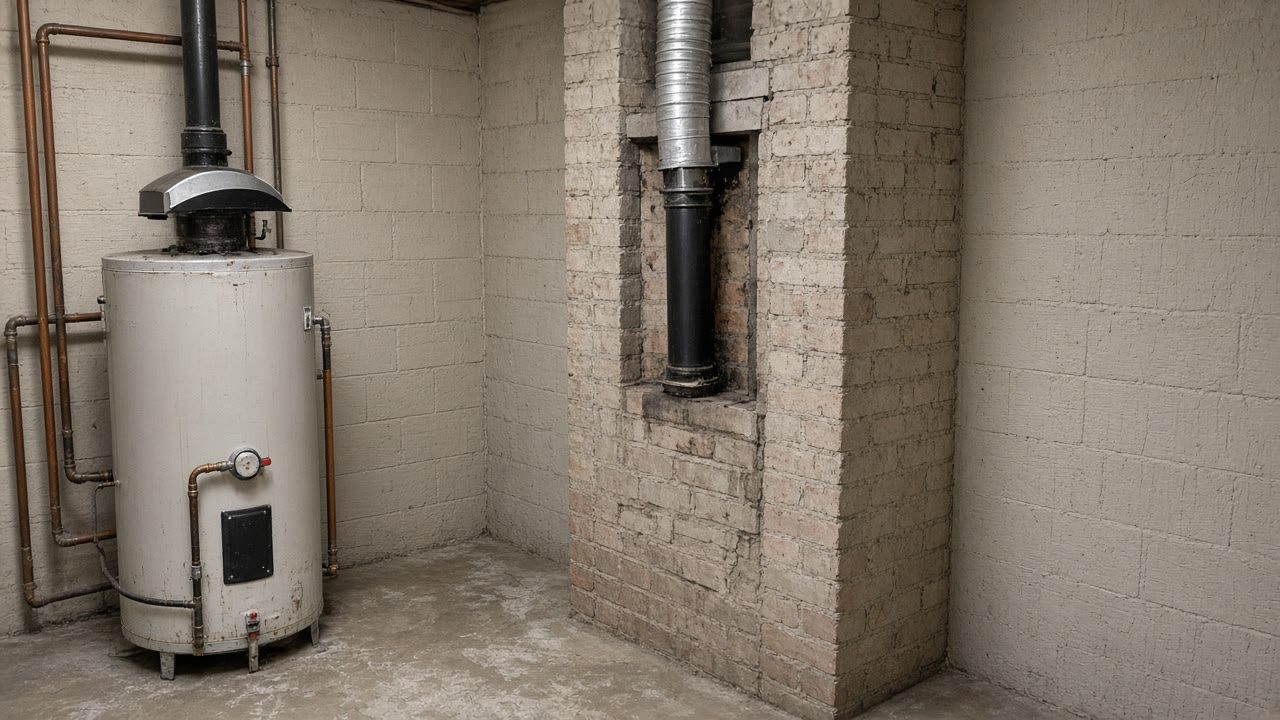
There is a second city rule worth settling at the same time, and it is easiest to deal with before the drywall goes up rather than after. Section 27-54(h) of the Property Conservation Code requires direct-fired heat producing equipment and the enclosure it sits in to have a supply of air adequate to replenish what complete combustion consumes, through openings to the exterior or to interior spaces that open to the exterior. If a basement is being finished, a powerful kitchen exhaust is going in or the returns are being reworked, the air supply for the appliance should be designed once for the finished house instead of twice. Ask whoever is drawing the distribution to say how they are handling it.
Whether the equipment is the real culprit
NYSERDA describes an oversized system pushing air at the thermostat before it mixes into the room, so the system shuts off early and the far rooms never catch up. That is not a duct fault and no new duct will cure it.
What has to be opened, and what making good means
In plaster housing that conversation decides both the price and how disruptive the week is. Get the ceilings and closets named in the scope.
Air for the appliance in the same design
Section 27-54(h) puts a combustion air duty on the equipment and its enclosure. A finished basement and a new exhaust fan change that balance.
What prewar city construction does to a duct route
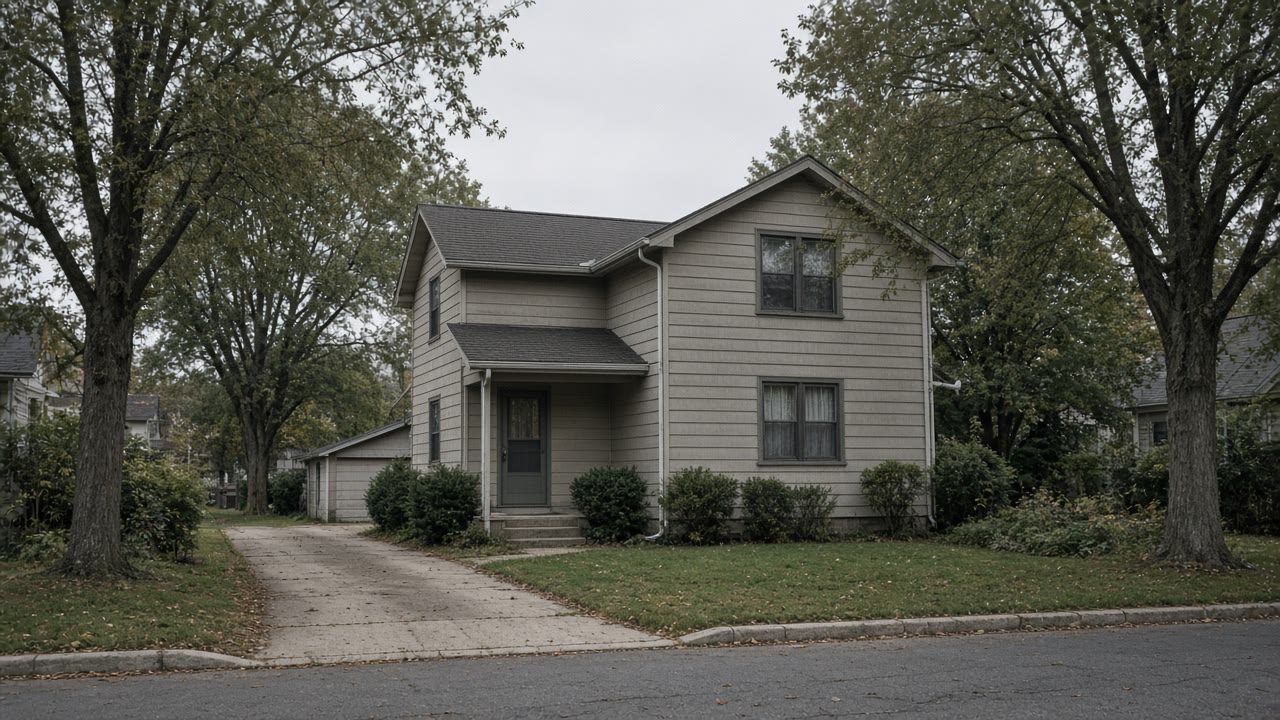
The American Community Survey 2020-2024 five-year estimates put the median year structure built in the city of Syracuse at 1948, with a margin of error of plus or minus 2 years. Of the city's 67,601 housing units, 29,152 were built in 1939 or earlier, which is 43.1 percent, 34,780 were built in 1949 or earlier, 51.4 percent, and 57,777 were built before 1980, 85.5 percent. Only 4,333 units, 6.4 percent, were built in 2000 or later. Of 59,816 occupied units, 24,889 are owner occupied, 41.6 percent.
Source: US Census Bureau, American Community Survey 2020-2024 5-year estimates, tables B25034, B25035 and B25003, Syracuse city, New York, accessed 2026-09-14
Section 27-54(h) of the City of Syracuse Property Conservation Code requires that direct-fired heat producing equipment and the enclosure it sits in be provided with a supply of air adequate to replenish that consumed by complete combustion at the rated gross output of the equipment and to ventilate the enclosure, supplied by one or more openings to the exterior or by fixed openings to interior spaces that open to the exterior. Section 27-54(i) requires equipment burning solid or liquid fuel to be connected to suitable chimneys or flues and not to gas vents, prohibits unvented liquid fuel heaters, and requires gas-fired equipment to be connected to a suitable chimney, flue or gas vent where discharging combustion products into the space would be a hazard.
Source: City of Syracuse Property Conservation Code, section 27-54, Heating, paragraphs (h) and (i), 2020 compilation published by the City of Syracuse, accessed 2026-09-14
NYSERDA describes low-load cycling as what happens when the minimum capacity of the system is higher than the load of the home, so that the system repeatedly cycles on and off, which it says results in inefficient operation, high energy bills and increased wear to the mechanical components. It states that constant cycling stresses the equipment and increases wear and tear, which can lead to premature breakdown of components such as fans, the compressor or valves. It also states that an oversized system can push hot or cold air towards the thermostat before it mixes evenly into the space, so the system falsely senses the setting is satisfied and shuts off early, leading to uneven air temperatures throughout the house.
Source: New York State Energy Research and Development Authority, Air Source Heat Pumps: Don't Oversize, sections headed Operational Issues, Comfort and Shorter Equipment Lifespan, accessed 2026-09-14
What ductwork involves
Why the duct route, not the sheet metal, sets the price in the city
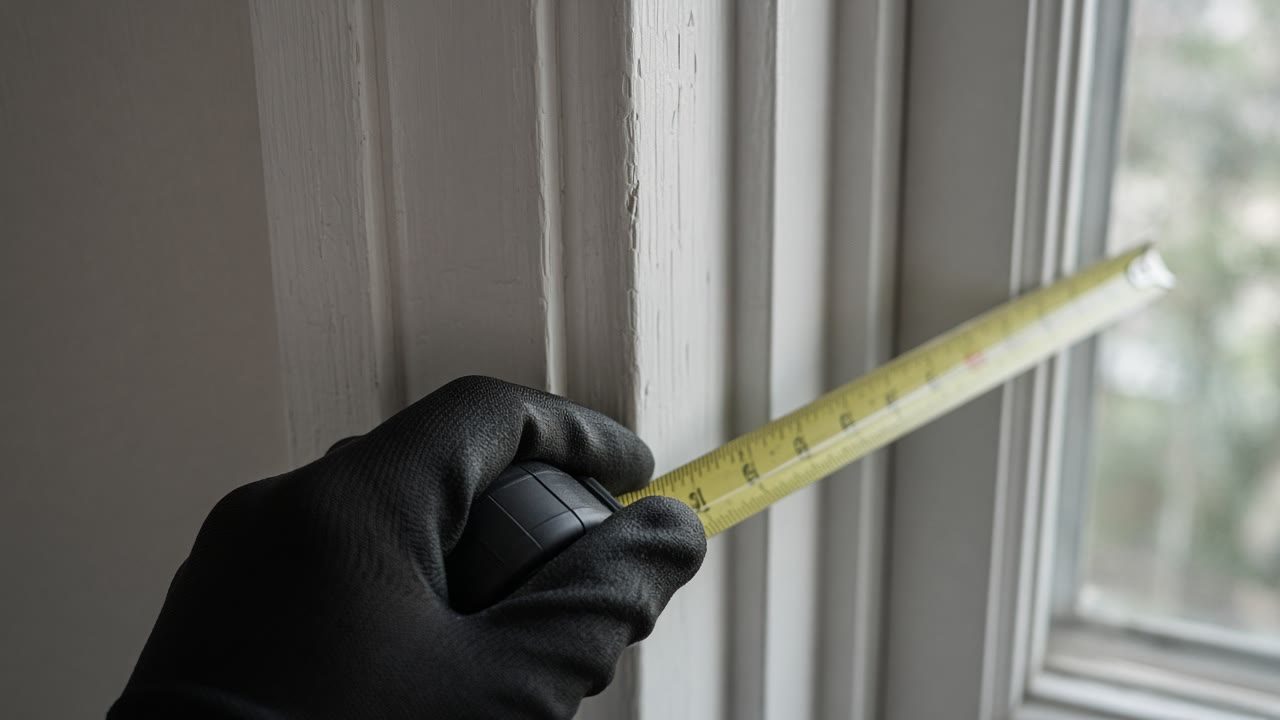
Getting air to the room that never gets any is a different job in the city than in the suburbs around it, and the reason is the construction. Of 67,601 city housing units, 29,152 were built in 1939 or earlier, so the question is rarely whether a duct is the right size and usually whether there is anywhere for one to run. That is why an honest survey ends with two options rather than one: a duct route with named ceilings and closets that have to be opened, or a ductless head that reaches the room without opening anything. A contractor who only ever sells one of the two has narrowed the question before looking at your house.
Name the room that is never right
Tell us which room and which season, and we will help you work out whether this is distribution or sizing.
Questions about air distribution in old city houses
There is nowhere to run a duct to the back bedroom. What then?
That is a common answer in this housing rather than a failure. The cold climate heat pump specification publishes separate performance thresholds for ducted and non ducted systems, so a ductless head is a recognized class of equipment. Whether it suits the room depends on the wall runs and on where an outdoor unit can stand.
Is Manual D something I should be asking about?
Yes, and almost nobody does. NYSERDA names Manual D alongside Manual J for the load and Manual S for the equipment when it tells contractors to do their own sizing rather than use rules of thumb. If the load calculation is the question to ask about the appliance, Manual D is the one to ask about the ducts.
Send the city address and the floor plan in words
Where the appliance sits and what is above it is enough for somebody to tell you whether a duct can get there.