
Ductwork, Ductless and Duct Permits in the Town of Clay
Duct alterations are the work most likely to fall between the lines, and Clay is the town that publishes no lines to check them against.
Ductwork quote in Clay
Share a few details so we can confirm coverage and arrange the right next step.
Would you rather talk it through? Call (315) 640-3590, answered 24/7.
$100 off your first job
Credited by us on your first booked job.
- One credit per customer per property, on your first booked job.
- Valid through December 31, 2026.
Mention this offer when you book. Full terms.
Sorting out a Clay distribution job
The technical half is more predictable. Clay's housing is newer than the villages closer to the city, with only 831 of 26,282 units built before 1940, so most complaints here are about balance, returns and zoning rather than about whether a duct can physically reach a room. The exception is the delivered fuel households and the rural edges of the town, where a house with no duct system at all is genuinely choosing between building one and fitting ductless equipment. Both are recognized routes, and the cold climate specification publishes separate performance thresholds for ducted and non ducted systems. Ask for both to be costed rather than accepting whichever one the contractor prefers to sell.
Nothing published means you have to ask
The Department of Codes lists permits as a service area with no schedule behind it, so the office decides what duct work at your address requires.
Balance and returns before construction
In a town where only 3.2 percent of homes predate 1940, most air complaints are about how the existing system is set up rather than about missing routes.
Cost the ductless option too
Non ducted equipment has its own published performance thresholds. It is a class of equipment, not a fallback, and it belongs in the comparison.
The unwritten permit question, and the housing behind a Clay airflow complaint
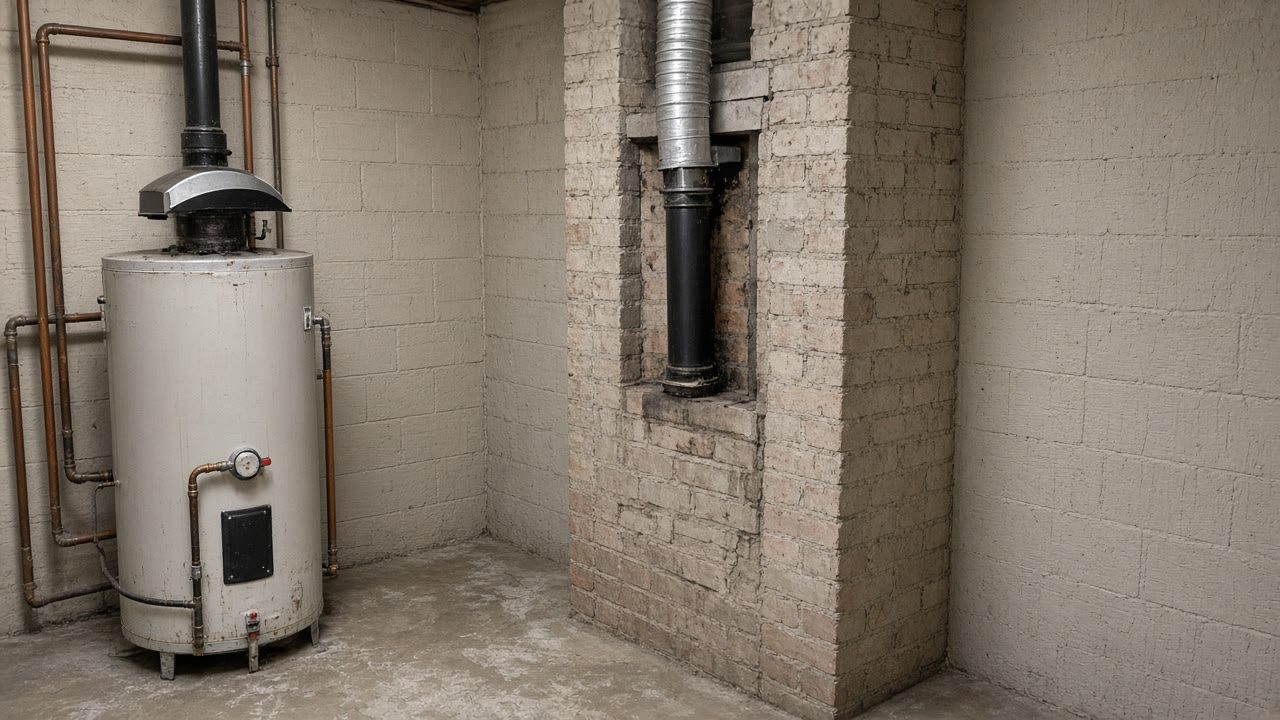
The Town of Clay Department of Codes page names building permits as one of its service areas but does not publish a schedule of the work that requires one. It gives the commissioner as Joseph Grispino, an email address of codes@townofclayny.gov and a telephone number of (315) 652-3800 extension 172.
Source: Town of Clay, New York, Department of Codes, accessed 2026-09-14
The American Community Survey 2020-2024 five-year estimates put the median year structure built in the town of Clay at 1978, plus or minus 1 year. Of 26,282 housing units, the largest count of any municipality in the county, only 831 were built in 1939 or earlier, 3.2 percent, 14,459 before 1980, 55.0 percent, and 4,053, 15.4 percent, in 2000 or later. Of 25,725 occupied units, 17,654 are heated with utility gas, 68.6 percent, 6,334 with electricity, 24.6 percent, and 832 with bottled, tank or LP gas, 3.2 percent. 18,316 units, 71.2 percent, are owner occupied.
Source: US Census Bureau, American Community Survey 2020-2024 5-year estimates, tables B25034, B25035, B25040 and B25003, Clay town, Onondaga County, New York, accessed 2026-09-14
The Cold Climate Air Source Heat Pump Specification Version 4.0, facilitated by Northeast Energy Efficiency Partnerships and effective January 1, 2023, defines a voluntary set of performance and reporting requirements designed to identify air-source heat pumps that heat efficiently in cold climates, which it defines as IECC climate zone 4 and higher. For central air conditioning heat pumps it requires a coefficient of performance at 5F of at least 1.75 at maximum capacity operation, HSPF2 of at least 8.5 and SEER2 of at least 15 for non-ducted systems, and HSPF2 of at least 7.7 and SEER2 of at least 14.3 for ducted systems. It requires the compressor to be variable capacity, meaning three or more distinct operating speeds or continuously variable, and requires units to hold a rating under AHRI Standard 210/240. It states that the specification is intended as a model equipment specification used by energy efficiency program administrators as a minimum requirement for program qualification.
Source: Northeast Energy Efficiency Partnerships, Cold Climate Air Source Heat Pump Specification (Version 4.0), effective January 1, 2023, accessed 2026-09-14
Section R503.1 of the Energy Conservation Construction Code of New York State states that alterations to any building or structure shall comply with the requirements of the code for new construction, and that an alteration shall be such that the existing building is not less conforming than it was before. Section R503.1.2, Heating and cooling systems, states that new heating, cooling and duct systems that are part of the alteration shall comply with Section R403, the section that contains the Manual S and Manual J sizing requirement. The only exception given at R503.1.2 relieves duct systems with less than 40 linear feet in unconditioned spaces from duct testing.
Source: Energy Conservation Construction Code of New York State 2020, Chapter 5 [RE] Existing Buildings, sections R503.1 and R503.1.2, via UpCodes, accessed 2026-09-14
What ductwork involves
Why duct work is the hardest thing to check in Clay
Every municipality around here publishes a summary of what needs a building permit, except this one. The Town of Clay Department of Codes names building permits among its service areas and gives a commissioner, an email address and a telephone extension, but no schedule of the work. Duct work is exactly where that bites, because it is the part of a system project most likely to be treated as incidental: new trunks and returns in an existing house sit inside the Uniform Code and the Energy Code whether or not anyone calls them an alteration. So the sequence in Clay is call, then scope, then order, and the call costs nothing.
Call first, open ceilings later
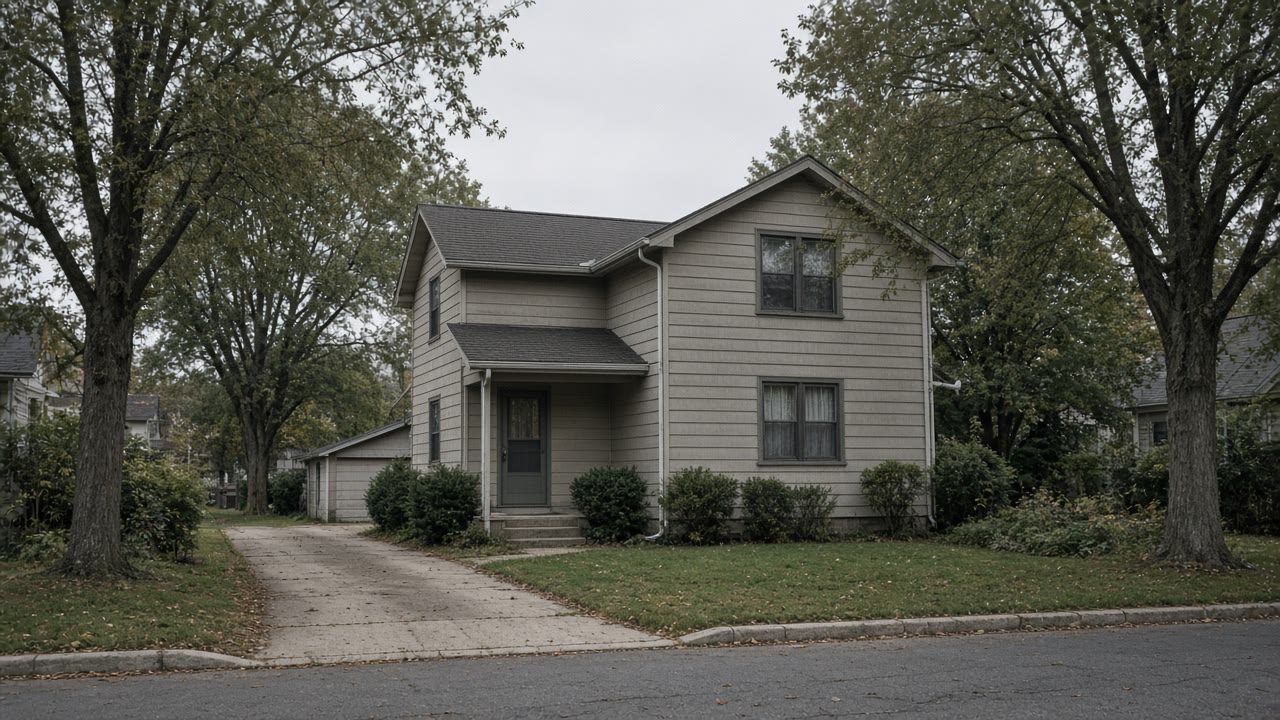
Tell us what the distribution problem is and we will make sure the paperwork question is settled early.
Duct questions from Clay homeowners
Does new ductwork need a permit in Clay?
We cannot tell you and neither can the town's website, because it publishes no list. What we can tell you is that duct systems that are part of an alteration are addressed by section R503.1.2 of the state energy code, which sends them to the section carrying the sizing requirements. Ask the Department of Codes what that means for your job.
Is duct testing part of this?
It depends how much of the run sits in unheated space. The energy code publishes a single exception at R503.1.2 relieving duct systems with less than 40 linear feet in unconditioned spaces from duct testing. If most of your run is in a Clay basement or attic, ask which side of that line the work falls on.
Ducted and ductless, both priced
Send the Clay address and we will arrange a comparison rather than a single recommendation.